Jiu-Jitsu Style Presents

An Ancient Tradition.A Living Art.

The History of Jiu-Jitsu

Jiu-jitsu did not emerge from a single moment, one person, or one perfectly straight line. Its story was shaped through combat traditions, cultural exchange, technical experimentation, competition, migration, and continual adaptation.

Its roots extend into the martial systems of Japan. Its modern expression was profoundly shaped in Brazil. Its influence now reaches across the world.

Enter the timeline
Act I

The Roots

Japanese martial systems, battlefield grappling, and the schools that became known as jujutsu.

Centuries before modern sport · Japan

The Martial Traditions of Japan

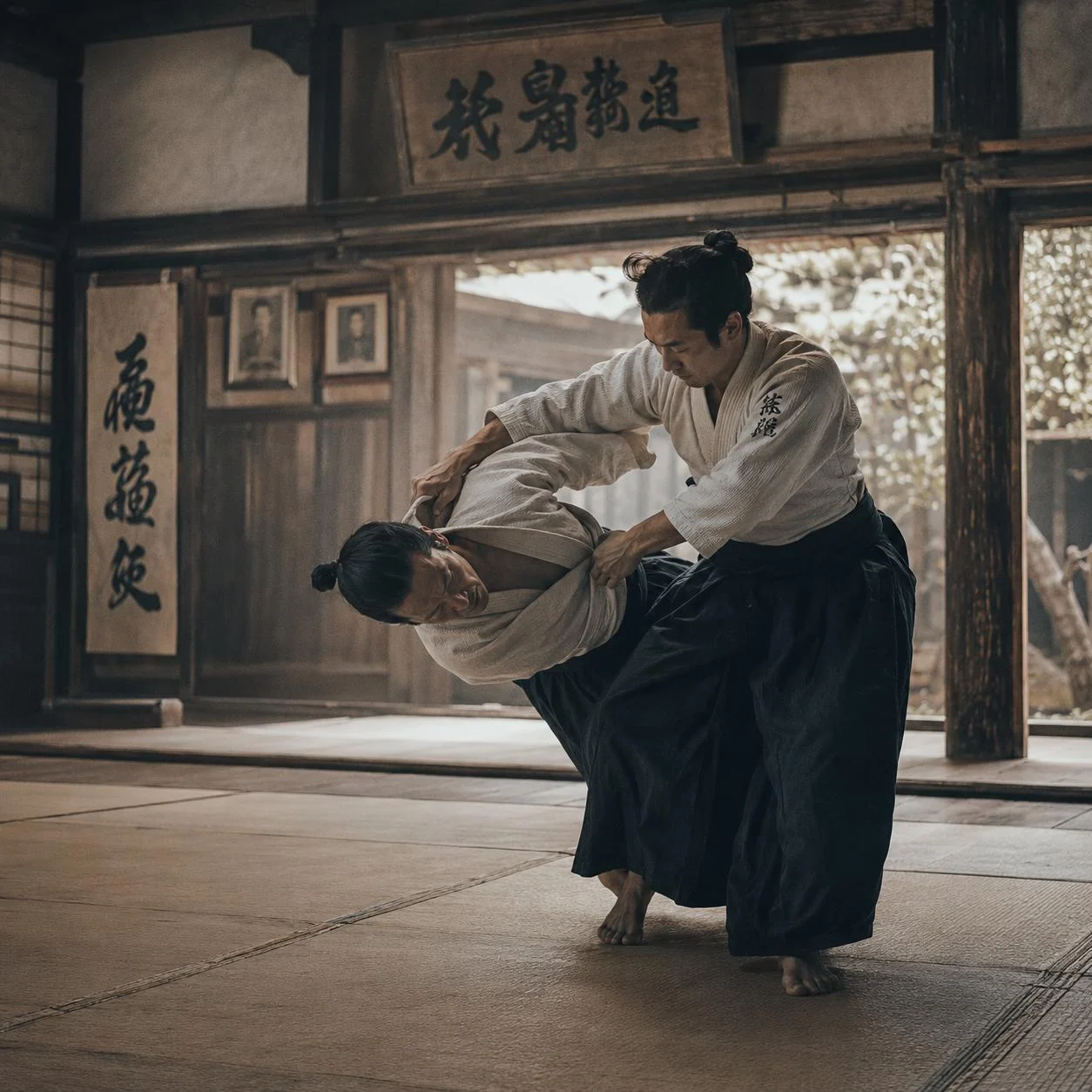
Japanese systems of unarmed combat developed around the needs of warriors who might lose a weapon or be forced into close range. Rather than relying on strikes alone, they built methods of throwing, pinning, controlling, joint locking, choking, escaping, and turning balance and leverage against force.

Different schools developed distinct systems, customs, and technical priorities. Those varied traditions later became broadly associated with the terms jujutsu or jiu-jitsu.

Leverage was the answer to strength long before it had a name.
1882 · Tokyo, Japan

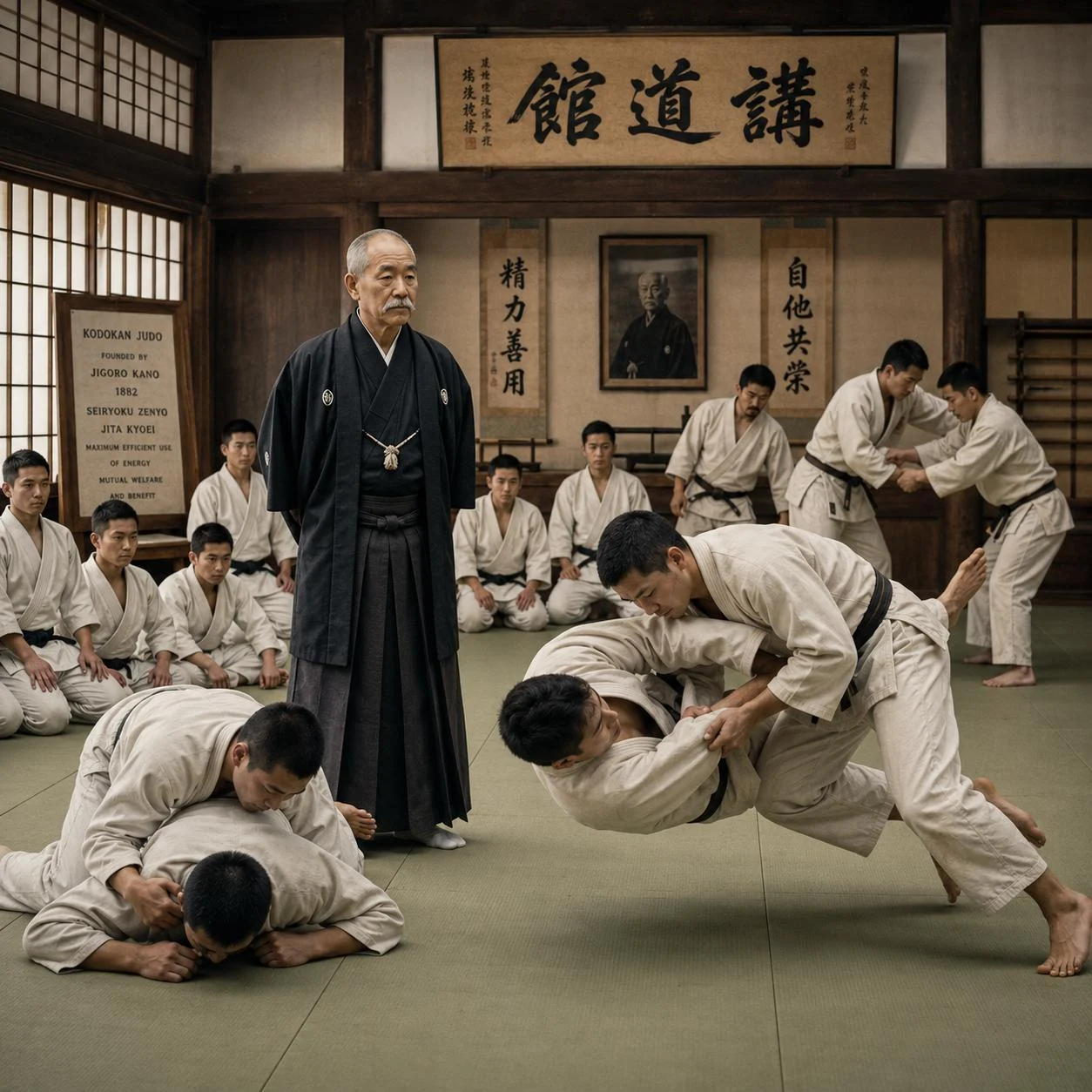
Jigoro Kano and the Kodokan

Jigoro Kano studied multiple traditional jujutsu systems and developed Kodokan judo as a structured method of physical education, technical practice, and character development. He emphasised efficient use of energy, systematic instruction, and live training against resisting partners.

The Kodokan became one of the most influential institutions in the development and international spread of modern grappling.

Maximum efficiency. Mutual welfare and benefit.

The art could not remain in one place.

Act II

The Journey

Japanese grappling moves outward — demonstrations, teaching, travel, and challenge matches.

Late 19th – early 20th century · Europe, the Americas and beyond

Japanese Grappling Travels the World

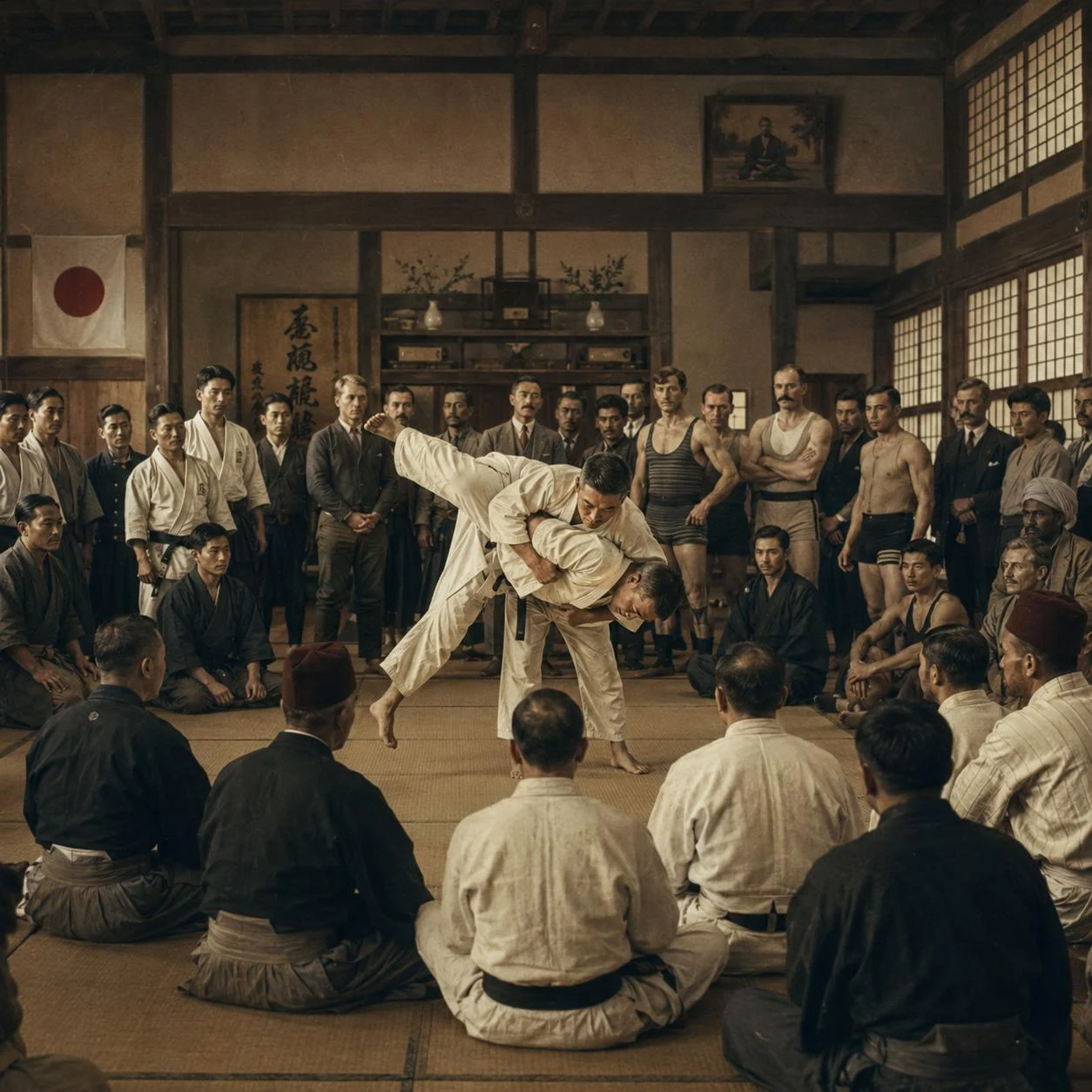
Japanese judo and jujutsu practitioners began travelling internationally, giving demonstrations, teaching students, and taking part in challenge matches.

Those encounters introduced Japanese grappling to new audiences and allowed the systems to be tested against wrestlers, boxers, and practitioners from other martial traditions.

A journey across the world became the beginning of something new.

Act III

The Brazilian Evolution

Maeda, the Gracie family, early academies, vale tudo, and a system adapted around leverage.

1910s · Brazil

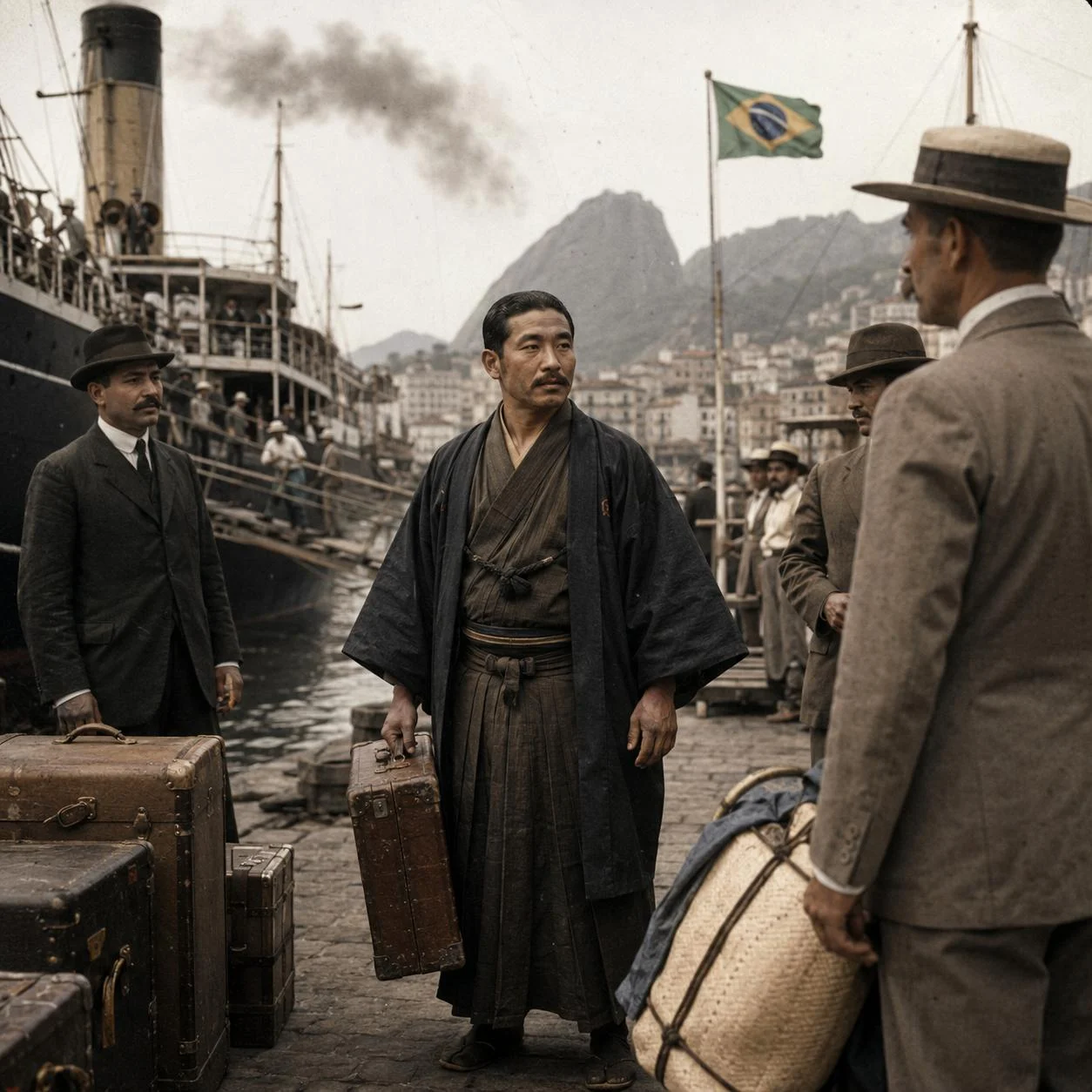
Mitsuyo Maeda Arrives in Brazil

Mitsuyo Maeda was an accomplished Kodokan judoka and international martial-arts representative. After years of travel and competition he established connections in Brazil and shared his grappling knowledge there.

His teaching became an important bridge between Japanese grappling and the Brazilian development of modern jiu-jitsu. The IBJJF describes Maeda’s instruction of Carlos Gracie as a foundational connection in the art’s development.

Early 20th century · Brazil

Carlos Gracie Begins Training

Carlos Gracie learned grappling associated with Maeda’s teaching and began sharing the art with his family and other students. Carlos and his brothers eventually established an academy and promoted their system through instruction, public demonstrations, and challenge matches.

The original Gracie Academy opened during the 1920s, and Carlos is widely recognised as a foundational figure in modern Brazilian jiu-jitsu.

20th century · Brazil

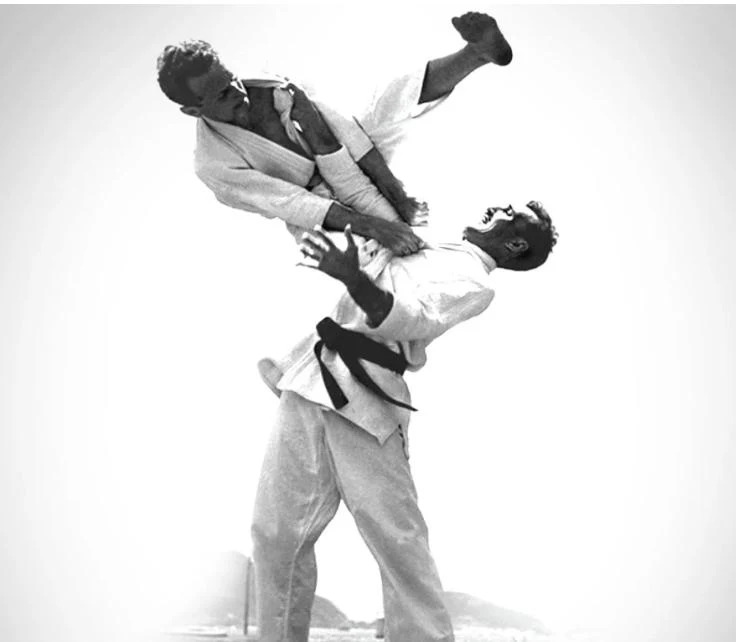
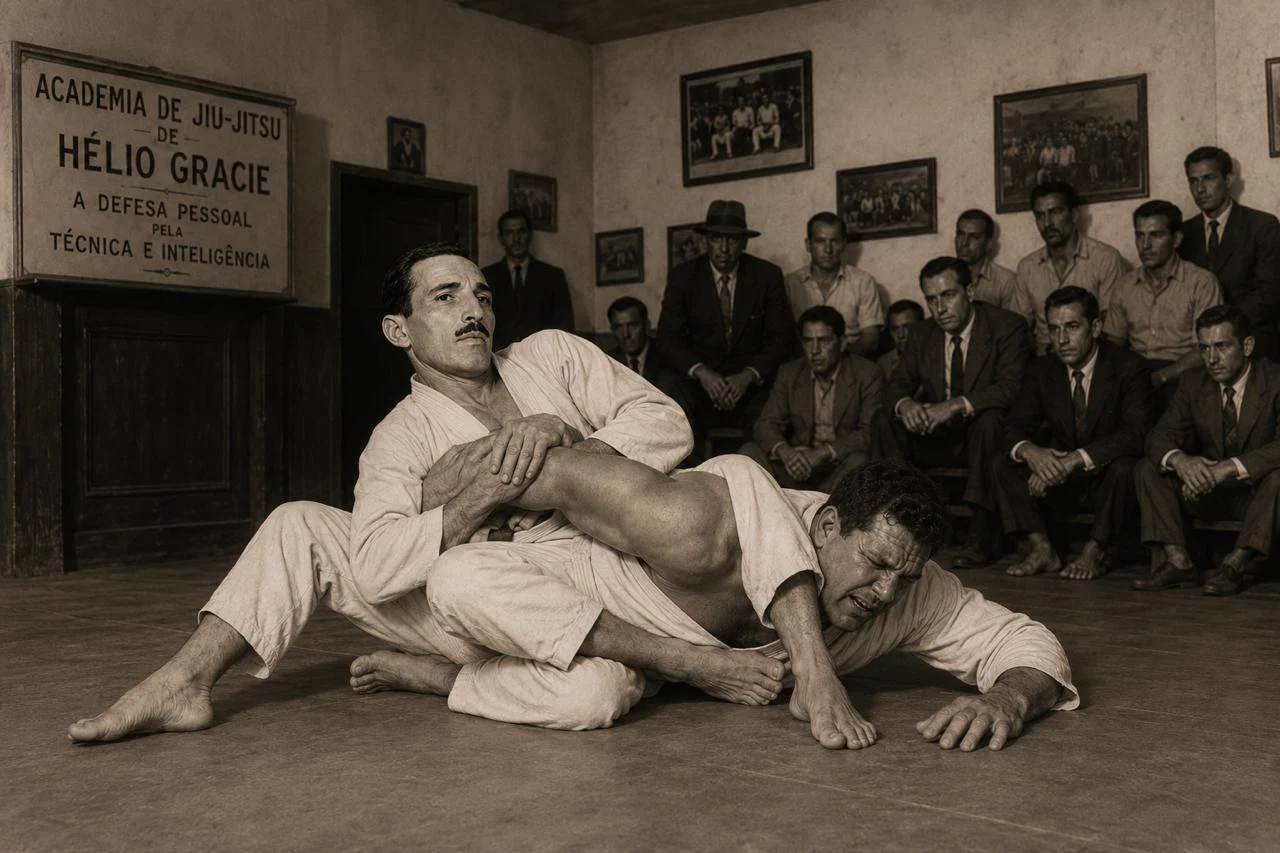
Hélio Gracie and Technical Adaptation

Hélio Gracie became one of the art’s most influential practitioners and public representatives. He emphasised leverage, positioning, timing, and technical efficiency, contributing to a system that could be practised by people unable to depend on superior size or strength.

His challenge matches helped generate public interest in the effectiveness of ground fighting and submission-based combat.

A system built so that size would not decide the outcome.

Mid-to-late 20th century · Brazil

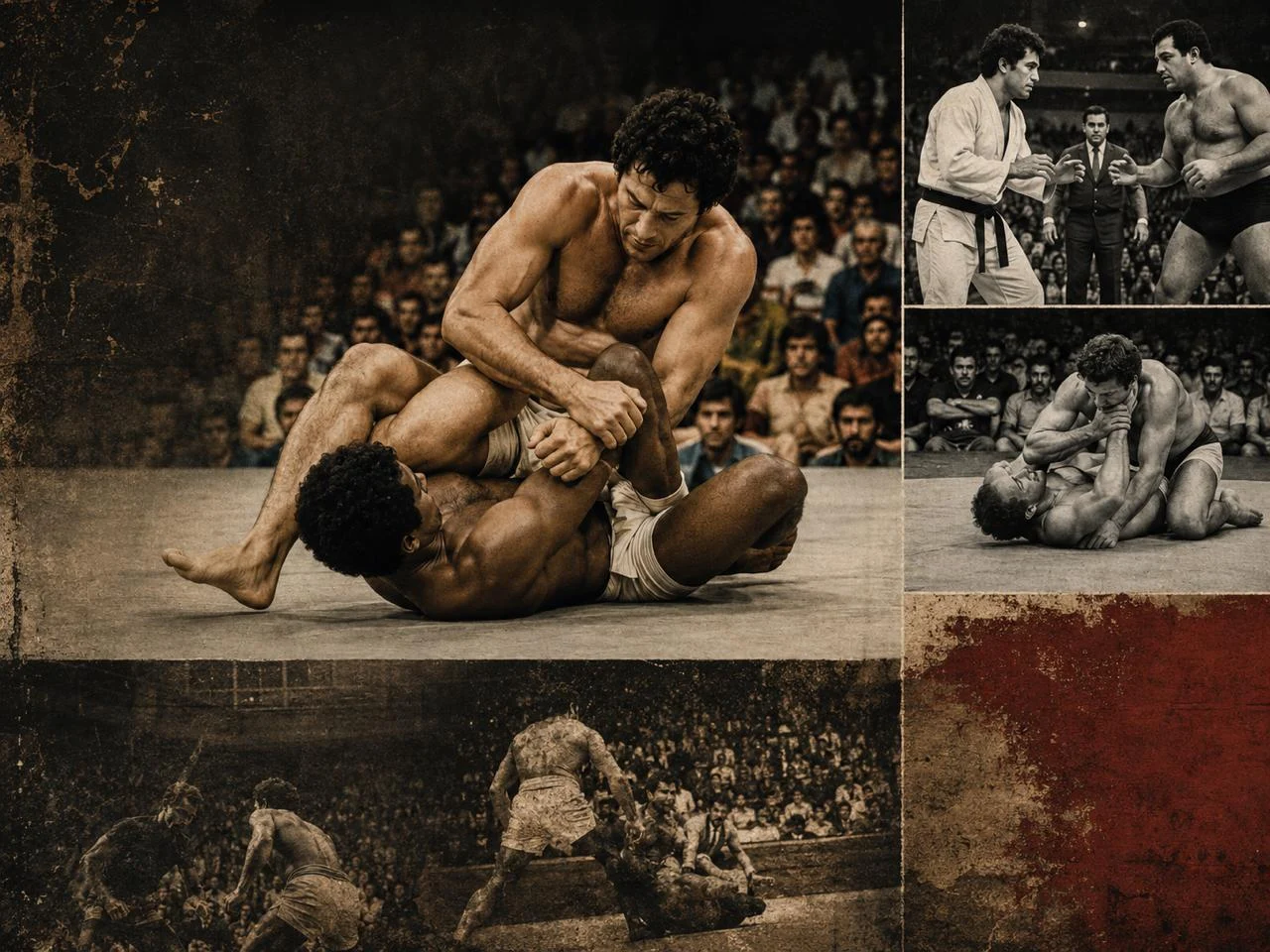
Challenge Matches and Vale Tudo

Jiu-jitsu developed in an environment where martial artists frequently tested their methods through challenge matches and vale tudo competition, placing practitioners from different backgrounds against one another under relatively limited rules.

The results refined strategy, increased the emphasis on positional control, and demonstrated the effectiveness of ground fighting against larger or differently trained opponents.

Then the world saw what happened when the fight reached the ground.

Act IV

The Global Expansion

New teams and branches, international academies, early mixed martial arts, and organised sport.

Mid-to-late 20th century · Brazil

New Teams and New Branches

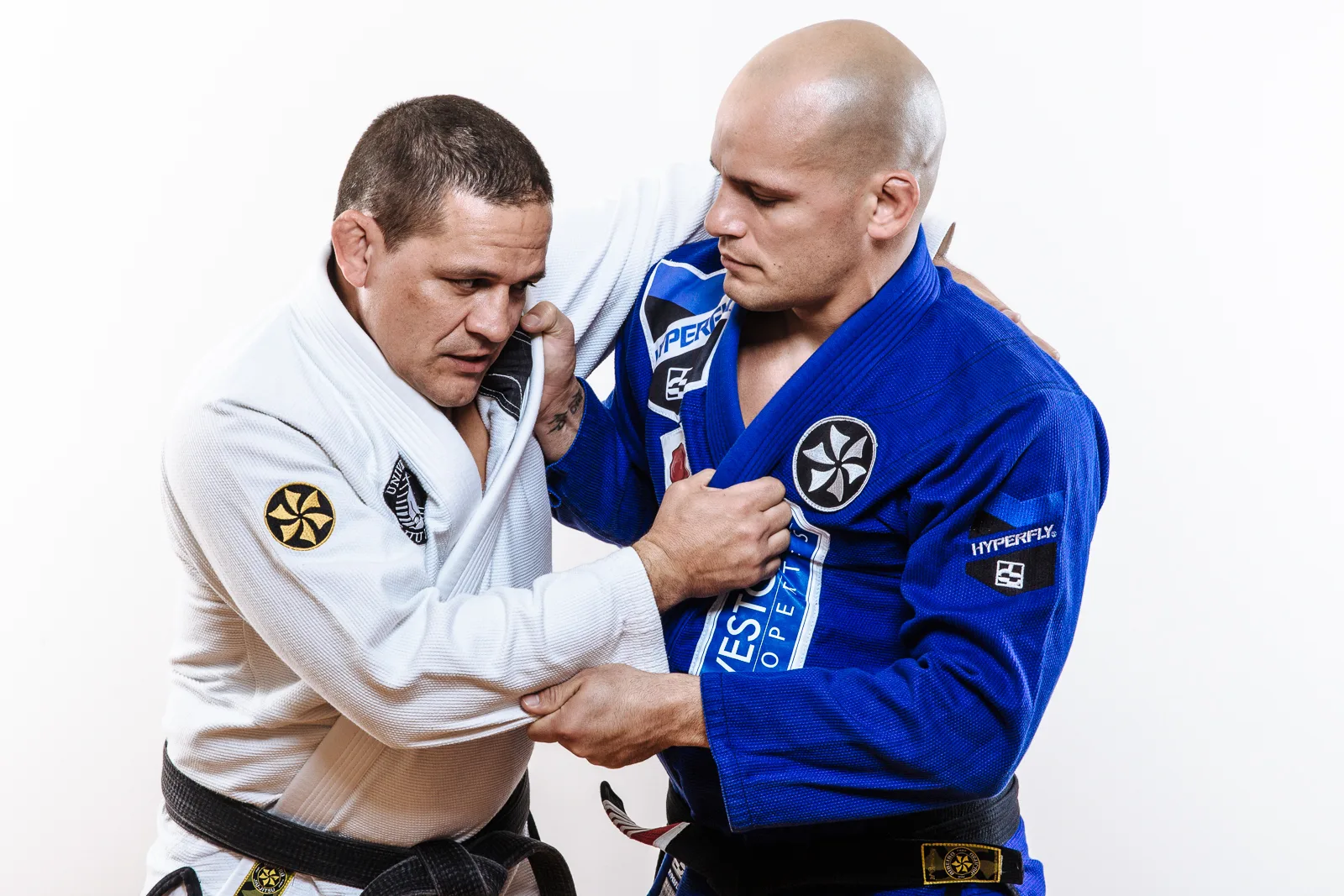
As the art expanded it developed through more than one family line or academy. Influential instructors, teams, and competitors contributed new strategies, teaching systems, competition styles, and technical innovations.

The growth of academies across Brazil created a larger competitive ecosystem and ensured jiu-jitsu would keep developing through many different communities.

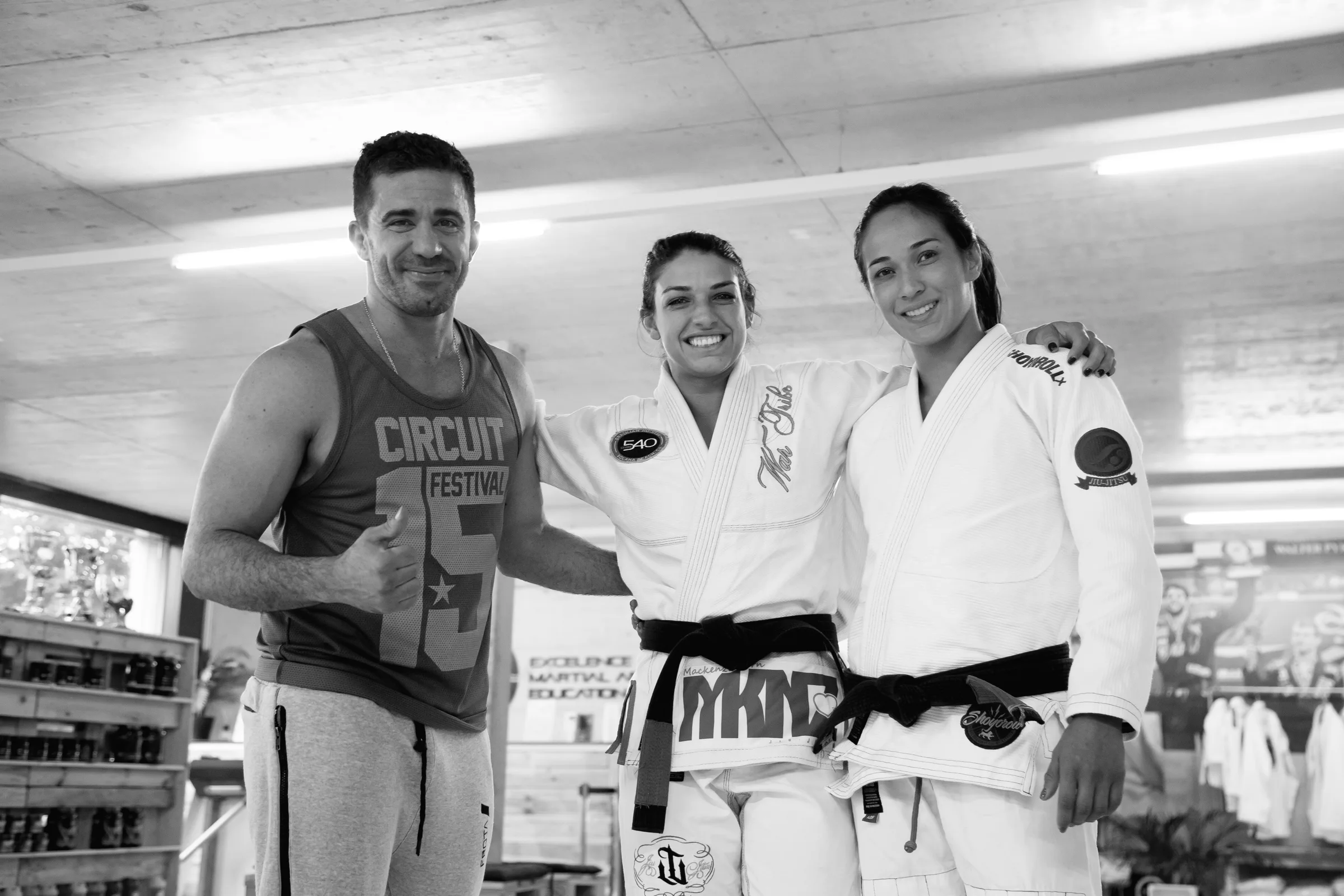
Two black belts standing together
The art grew through many lineages, not one.

Late 20th century · United States and worldwide

Jiu-Jitsu Reaches a Global Audience

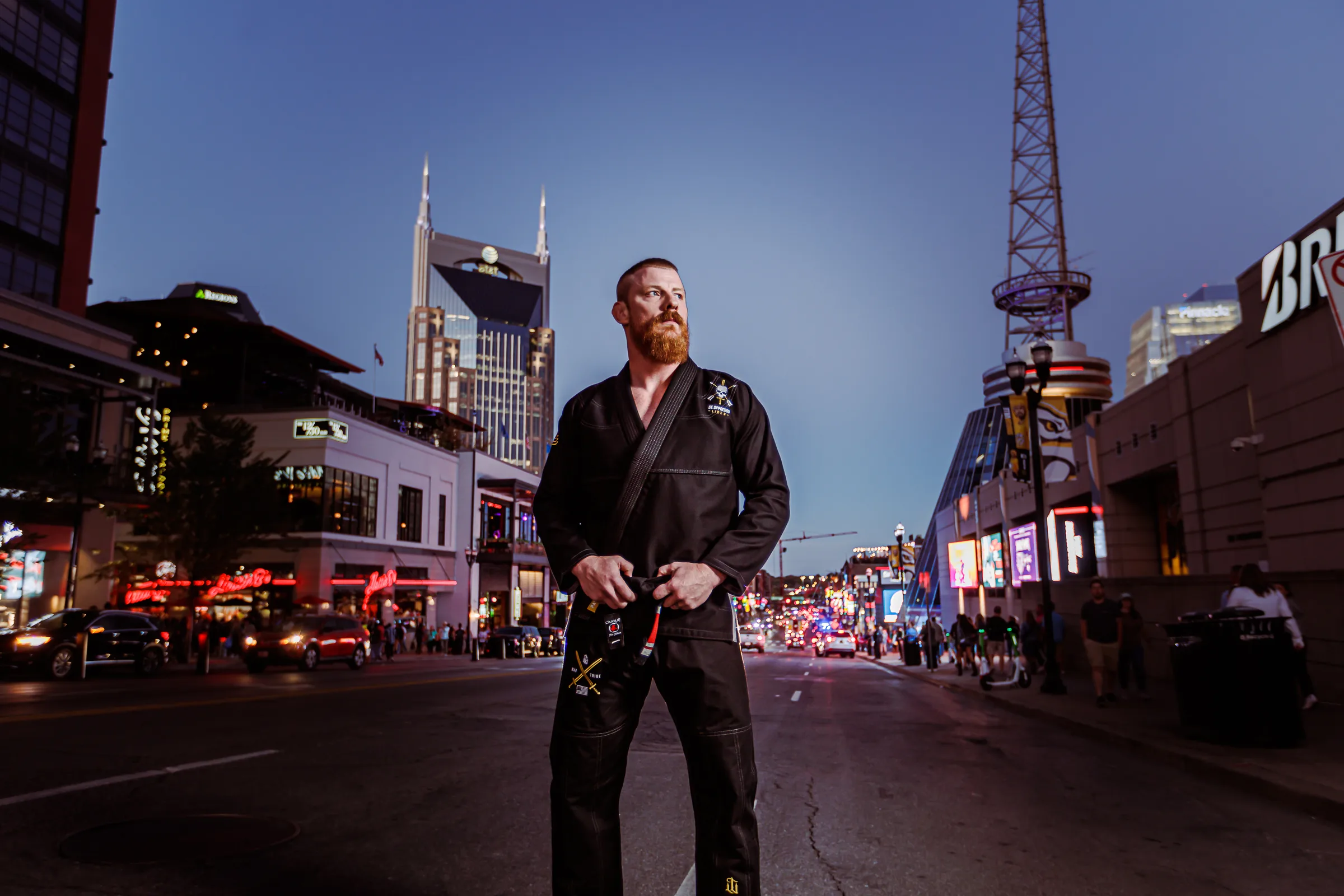
As Brazilian practitioners opened academies internationally, jiu-jitsu began reaching students across North America, Europe, Asia, and beyond. Its effectiveness in early mixed-martial-arts events introduced millions of viewers to grappling, positional control, and submissions.

Jiu-jitsu began influencing how martial artists around the world trained and understood realistic fighting.

A practitioner in a city at dusk
The art crossed borders, then continents.

1990s onward · Global

The Rise of Organised Sport Jiu-Jitsu

Formal competition structures helped transform jiu-jitsu into an increasingly organised international sport. The first listed IBJJF World Jiu-Jitsu Championship results date to 1996, marking the emergence of a formal world-championship platform.

Rule systems, belt divisions, weight categories, and international events gave athletes more opportunities to compete and connected practitioners across countries.

Competitors on a championship mat
Structure, divisions, and a world stage.

The art had travelled the world. Now the world was changing the art.

Act V

The Living Art

No-gi, relentless technical evolution, a worldwide community, and a future still unwritten.

Late 20th – early 21st century · Global

The No-Gi Revolution

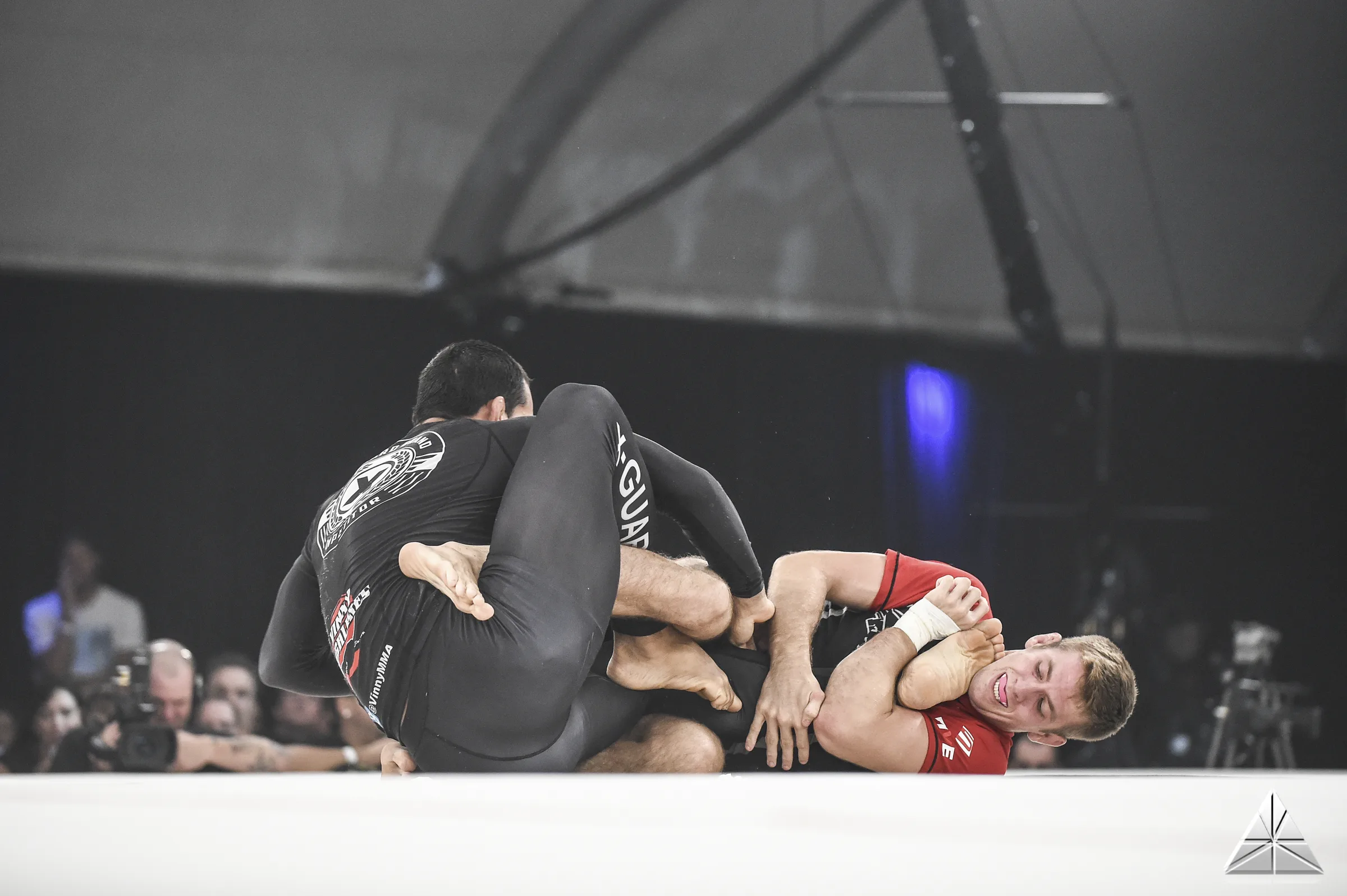
No-gi grappling developed into a major competitive discipline alongside traditional gi jiu-jitsu. Different grips, faster transitional exchanges, wrestling influence, leg-lock systems, and new strategic approaches accelerated technical innovation.

Gi and no-gi communities increasingly influenced one another, expanding the art’s possibilities.

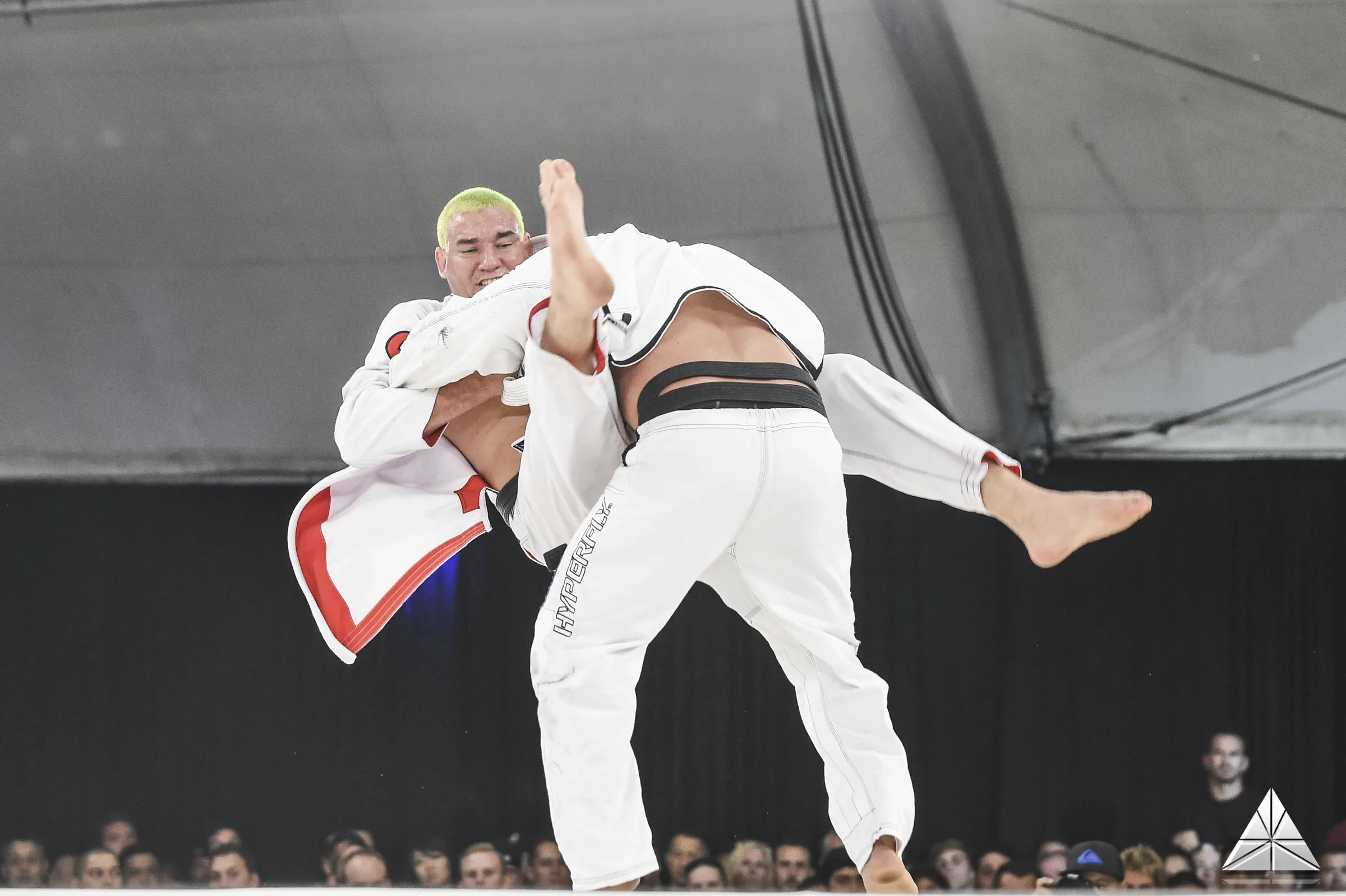
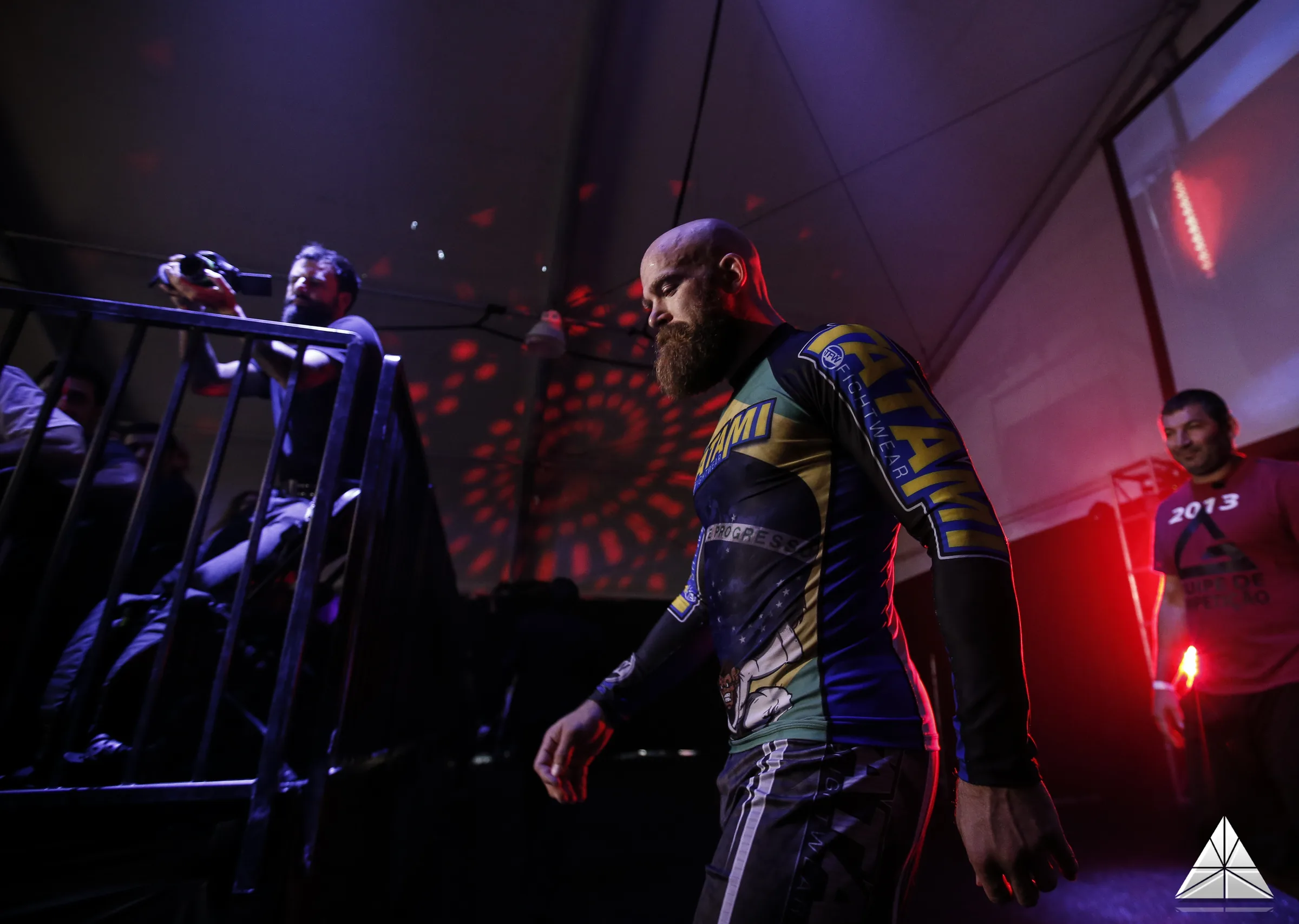
A no-gi exchange under arena light
New grips, new problems, new answers.

21st century · Global

The Age of Rapid Innovation

Digital instruction, international competition, online video, social media, cross-training, professional coaching, and wider access to elite technique accelerated the art’s evolution. A technique developed in one academy could be studied across the world almost immediately.

Athletes increasingly combined ideas from judo, wrestling, sambo, traditional jiu-jitsu, submission grappling, strength and conditioning, sports psychology, and match analysis. Development that once moved through travel and direct instruction could now spread globally within days.

Same questions. New answers.

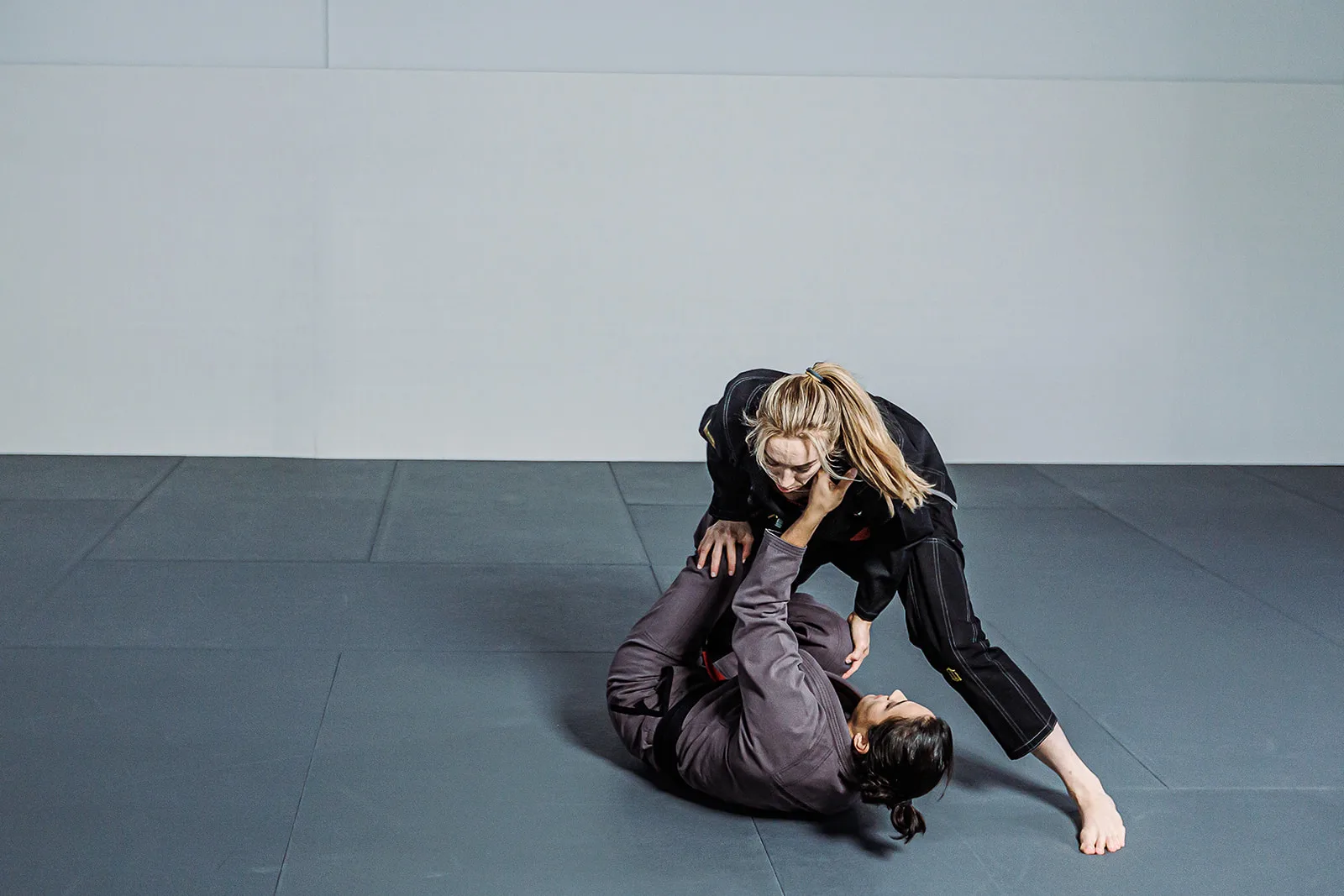
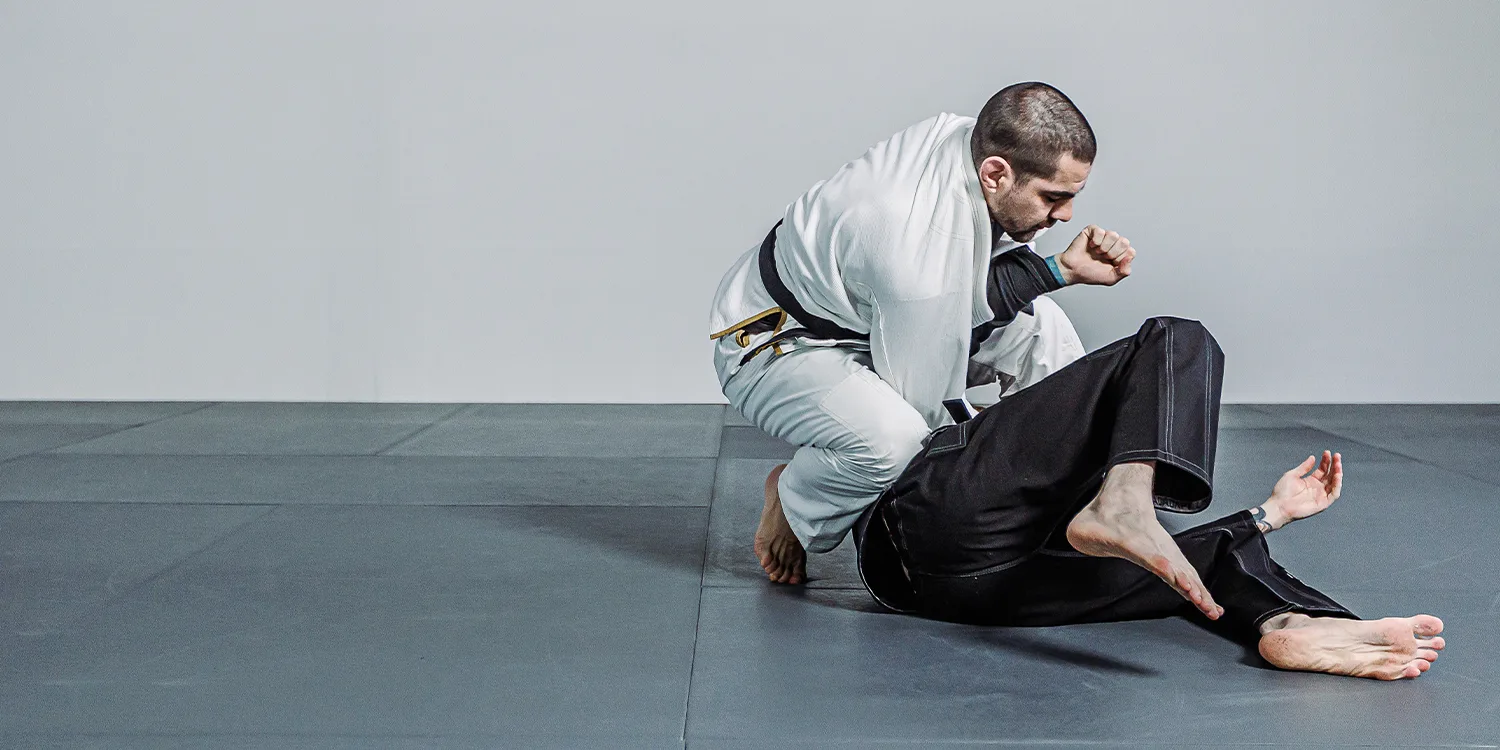
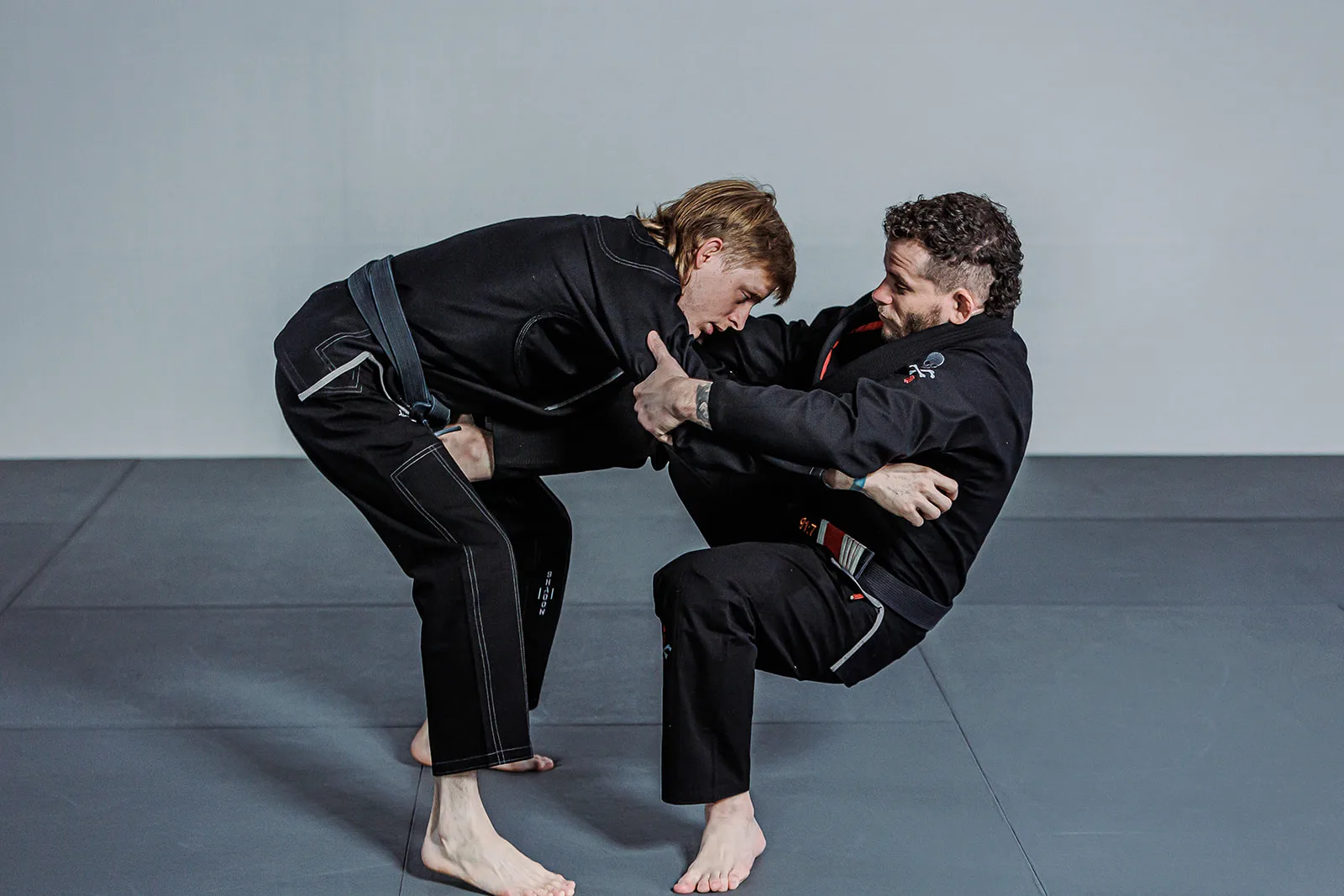
Close study of a technical exchange
A technique studied, replayed, and adapted worldwide.

Today · Everywhere

A Worldwide Community

Jiu-jitsu is now practised by children, adults, professional athletes, hobbyists, first responders, military personnel, parents, and people from nearly every walk of life. Some train to compete. Some train for self-defence. Some come for fitness, confidence, discipline, friendship, or personal transformation.

The art continues to evolve every day, in every academy, through every practitioner willing to step onto the mat.

Every generation inherits the art, tests it, and adds something new.

Coaches and students together
The art belongs to whoever shows up.
Coaches and students together
Young practitioners training
Competitors mid-exchange
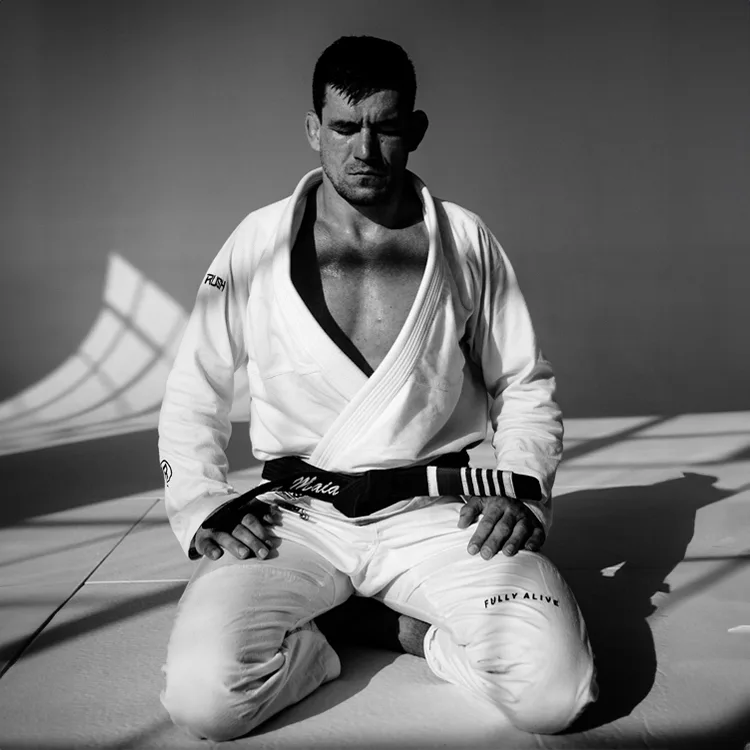
A quiet moment before training
A technical exchange on the mat
A practitioner in the academy
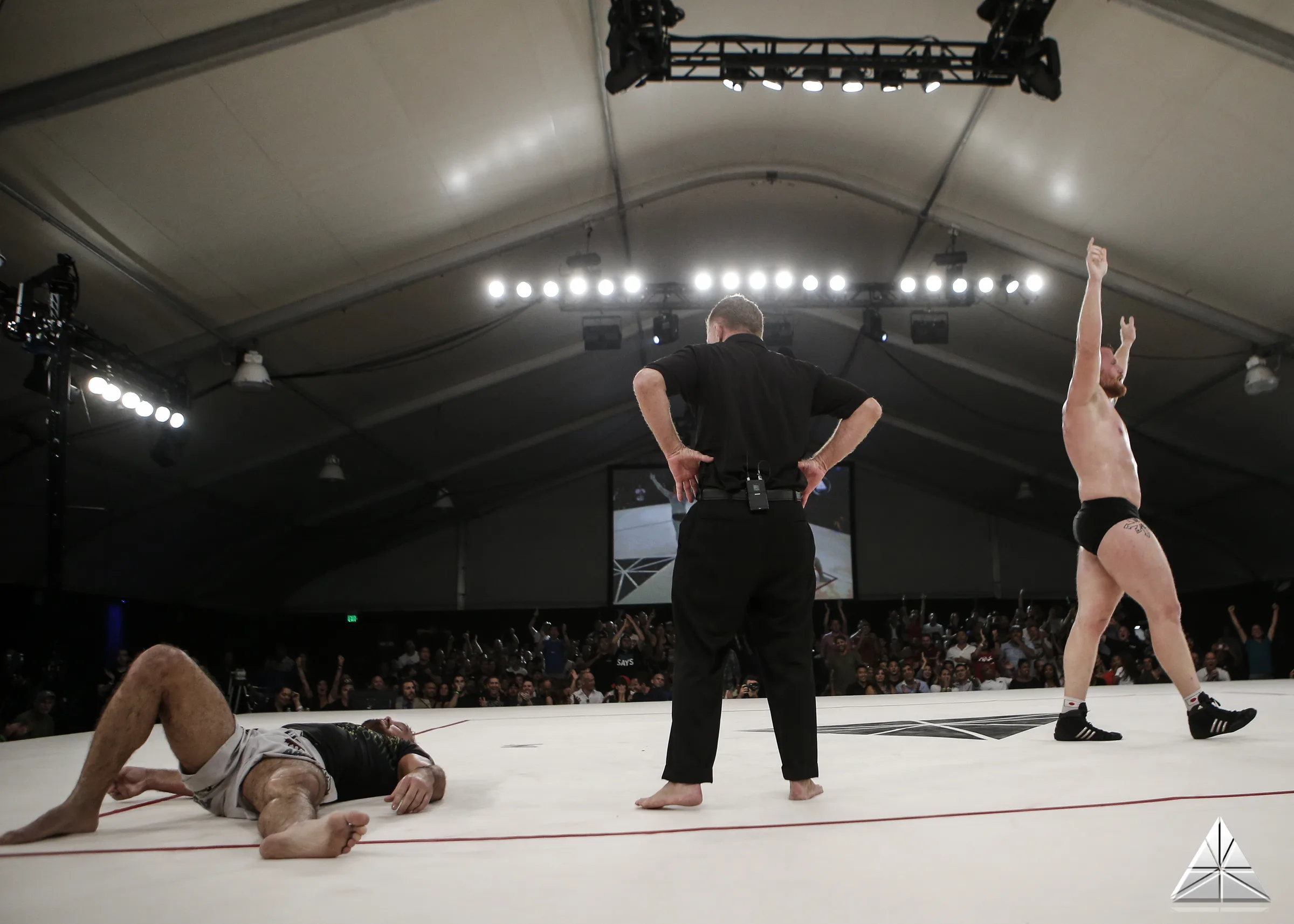
Competition under arena light

Now · Wherever you train

You are part of the history

Every round changes the practitioner. Every practitioner changes the room. Every academy changes the community. Every generation adds something to the art.

The next chapter is written every time someone steps onto the mat.

Jiu-jitsu has ancient roots.But it has never stopped evolving.

The history of jiu-jitsu is not merely a record of where the art has been. It is an invitation to participate in where it goes next — and that part is still being written, in every academy, by everyone willing to step onto the mat.