McGregor's Recovery Drug Saga Through a Jiu Jitsu Lens
Conor McGregor is not really a BJJ name, but he is a Jiu Jitsu story this week. The former two-division UFC champion has fired back at a New York Times report alleging he sought permission to use…
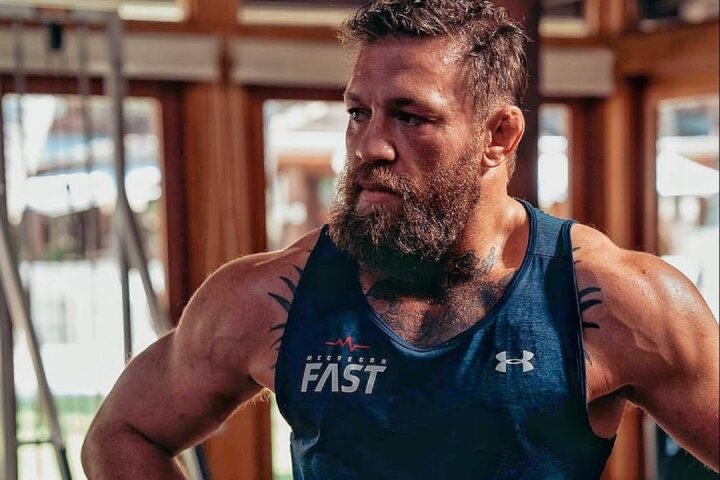
Conor McGregor is not really a BJJ name, but he is a Jiu Jitsu story this week. The former two-division UFC champion has fired back at a New York Times report alleging he sought permission to use banned recovery substances while rehabbing the leg he broke against Dustin Poirier at UFC 264 in 2021. His response — given to Yahoo Sports — was four-letter, theatrical, and very on-brand. The story underneath the noise, though, is one that quietly maps to every Brazilian Jiu Jitsu practitioner who has ever tried to come back from a serious injury.
What actually happened
According to the Times report, McGregor's medical team formally requested permission for him to use banned recovery drugs during rehab. The request was reportedly backed by his surgeon and ultimately denied by USADA, the UFC's anti-doping partner at the time. McGregor then removed himself from the testing pool altogether to focus on recovery, before re-entering it ahead of his planned return against Michael Chandler. Speaking on it now, five years later, his answer was not contrition. It was a full-volume "shocking."
> "Shocking! Shocking! A man's private medical, from the most devastating injury that you'll see in combat sports. The whole thing is strange to me."
His full sit-down is worth seeing for yourself — watch the interview on YouTube — because the tone is doing as much work as the words.
The angle most BJJ fans skip past
It's tempting to file this under "MMA celebrity drama" and scroll on. Jiu Jitsu is not the UFC, and the average reader of a Brazilian Jiu Jitsu publication has nothing in common with a man airlifted out of the T-Mobile Arena. But the structural question McGregor is shouting about — what counts as "recovery" when the bone might literally not heal, versus what counts as cheating — is the same question quietly running underneath every elite grappling card.
Most of the BJJ majors don't sit inside a serious testing programme. IBJJF testing is famously thin. The no-gi super-shows that dominate the headlines mostly do not test at all. ADCC and a handful of high-stakes leagues are the exceptions, not the rule. The grey zone McGregor is yelling from is much wider in our sport than it is in his, and almost nobody talks about it.
Recovery culture on the mats
Strip the celebrity layer off and the situation is one a lot of working Jiu Jitsu players will recognise. You get hurt — a knee, a shoulder, a torn pec — and the road back is long. You take what your doctor prescribes. Some of it is squarely above the line. Some of it sits in a grey zone the testing pool would not love. For the every-day BJJ hobbyist, this is mostly a conversation you have with yourself in the bathroom mirror: are you healing, or are you cheating Tuesday's open mat?
For the competitor on a federation card, it is a much sharper line. And McGregor's case — however self-serving his framing — exposes the real tension underneath. Modern sports medicine has recovery protocols that meaningfully change outcomes for catastrophic injuries. Some of them are banned. The athletes most likely to need them are exactly the ones most exposed to the testing regime. The system has not really decided what it wants to do about that, and the silence is starting to show.
Why Jiu Jitsu should pay attention before this lands at our door
Brazilian Jiu Jitsu is having an unusual decade. Real money is moving in. Pay is rising at the top end. Sub-only leagues are starting to look and feel like proper pro sports. As the prize pots get bigger, the temptation curve gets steeper, and the rules around recovery and PEDs in jiu-jitsu are going to matter in a way they have not historically mattered.
The honest read on McGregor's outburst is not whether he is right or wrong about a 2021 USADA decision. It is that the conversation about recovery drugs in combat sports has gotten away from the people who are supposed to be in charge of it. Jiu Jitsu has a small window to be more thoughtful about its own version of this question before the same noise arrives at ADCC, at Who's Number One, at the next big-money sub-only night. Clean sport is not just a moral position. It is what makes the result at the end of the match mean anything.
If you train and compete and you're only half-listening to all this, the takeaway is simple. Heal properly. Ask the doctor the awkward question. Know what you are putting in your body — even if your favourite fighter says, in so many words, that he doesn't.
See you on the mats.
Original report via BJJEE.