Rafael Lovato Jr. Explains Why He's Done With ADCC
Rafael Lovato Jr. has spent the better part of two decades as one of BJJ's most respected competitors, a black belt world champion who later reinvented himself as an elite MMA fighter and never…
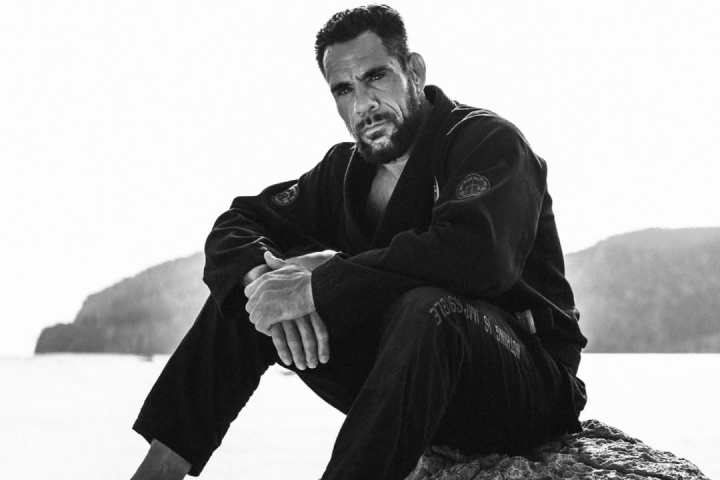
Rafael Lovato Jr. has spent the better part of two decades as one of BJJ's most respected competitors, a black belt world champion who later reinvented himself as an elite MMA fighter and never really stopped being dangerous on the mats. So when he says he's stepping away from ADCC, it's worth pausing on for exactly how unshocking his reasoning is.
While his training partners Felipe Costa and Victor Hugo prepare for this year's event, Lovato is taking a different road. As he put it bluntly, "No more ADCCs, man. I'm not competing against anybody in their 20s for free any more." It's a decision that says less about Lovato personally and more about a fault line running through Jiu Jitsu that's been widening for years.
The math that stops making sense
Lovato is 43. ADCC is a two-day, no-time-limit grappling gauntlet that asks competitors to survive multiple matches against the best submission grapplers alive, many of them a decade or two younger, with far less mileage on their joints and careers built around exactly this kind of tournament. For a working coach and father with nothing left to prove, the cost-benefit of that equation has flipped.
This isn't a new complaint in grappling, competitors ranging from purple belts to world champions have grumbled for years about the physical toll of top-level competition versus the pay. What makes Lovato's version notable is that he's not a hungry up-and-comer looking for a bigger paycheck to justify the risk. He's a veteran with championship pedigree at both black belt Jiu Jitsu and in the cage, openly saying the trade isn't worth it anymore without real compensation. When a competitor with that resume says no, it tends to land differently than when a twenty-something says it.
Chasing motivation, not just avoiding pain
The more interesting thread in Lovato's comments is motivation, not the money. He admitted he hasn't "had a super fun, inspirational challenge in the game in a while," and pointed to something a lot of long-time grapplers eventually notice about masters divisions: the Jiu Jitsu there tends to be more honest.
Lovato's read on it is worth sitting with: younger competitors, he said, often fight with their careers riding on the result, which can push them toward cautious, guarded performances. "When you're that young, maybe the career kind of comes first," he explained, "maybe you don't open up enough." Masters competitors, by contrast, are usually out there for one reason only, because they love the sport. There's no sponsorship on the line, no ranking to protect, nothing but the roll itself.
That's a quiet but real shift in how a lot of veteran black belts are starting to think about high-level BJJ competition. The "pure" version of the sport, in Lovato's telling, isn't necessarily happening at the elite open-weight superfights, it might be happening in masters brackets, where the stakes are personal rather than professional.
What this means beyond the elite level
Most people reading this will never be asked to compete at ADCC, let alone decide whether to skip it. But Lovato's reasoning maps onto something almost every longtime Brazilian Jiu Jitsu practitioner eventually has to reckon with: at some point, the calculation around competing changes. The body recovers slower. The "why" behind stepping onto the mat for a match has to come from somewhere other than career stakes.
Lovato was careful to note this isn't about decline, "whenever I'm at my best, I'm really hard to beat for anybody in the world at any age," he said, adding that the real issue is consistency, not peak ability, at 43 without a full professional framework behind him. That's an honest distinction, and it's one that applies just as much to a weekend-warrior blue belt as it does to a former world champion. You don't have to be washed up to decide a particular kind of competition no longer serves you.
It's also a useful reminder about why masters divisions exist and why they matter more than the "consolation bracket" reputation they sometimes get. For grapplers who've done the young-and-hungry version of competition already, masters Jiu Jitsu offers something ADCC's format structurally can't: a stage where the passion is the whole point, not a means to a paycheck or a ranking. Lovato clearly still wants to compete. He's just decided where he wants to spend that energy, and there's a lesson in that for anyone who's been training long enough to ask the same question of themselves.
See you on the mats.
Original report via BJJEE.