Kron Gracie, Rafa Mendes and BJJ's PED Reckoning
Kron Gracie has dropped a sentence into the BJJ world this week that the sport's competitive class has been quietly half-expecting for fifteen years. According to a [report from…
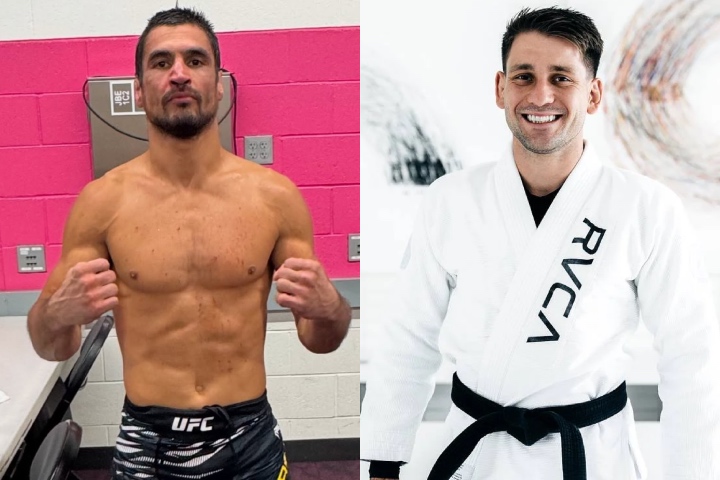
Kron Gracie has dropped a sentence into the BJJ world this week that the sport's competitive class has been quietly half-expecting for fifteen years. According to a report from BJJEE, Kron says Rafael Mendes privately admitted to using performance enhancing drugs after the 2009 ADCC World Championships — the event that helped launch Rafa as one of the most decorated competitors of his generation.
The claim is short, specific, and unprovable in either direction. It is also a useful moment to look at what Brazilian Jiu Jitsu has and hasn't done about the PED conversation that keeps washing up on the sport's beach.
What Kron actually said
Kron's words, as reported, are spare. He says Rafa told him "in room" after 2009 ADCC that he was on steroids and assumed Kron — also competing that day — would respond by saying "me too." Kron says he didn't. "I looked at him awkwardly and that was that."
That is the whole story so far. No documents, no other witnesses, no admission from Rafa. The allegation surfaced in response to recent denials by the Mendes camp of long-running whispers that a positive test contributed to Rafa retiring from competition at just 27 — denials that have been working their way around Jiu Jitsu social media for weeks. Rafa has not publicly responded to Kron's latest claim, and deserves the basic decency of being treated as innocent until anything more substantial lands on the table.
Why this one lands harder than the usual mat gossip
The thing that gives Kron's comment some weight isn't his last name. It's his testing record. After his BJJ career, Kron moved to MMA and spent several years in the UFC under the promotion's USADA anti-doping program — including the kind of out-of-competition testing that catches what in-competition urine tests miss. He came up clean. Whatever you think of how his MMA run played out, he is one of the very few prominent BJJ-to-MMA crossovers who walked through a rigorous testing regime and stayed off the violations list.
That is not proof of anything about Rafa. It is the reason this particular accusation isn't getting laughed off the way most "everyone knows X was on the gas" mat-gossip gets laughed off — there's a person making it who has, at least personally, lived with the testing.
ADCC 2009 and the era nobody was testing
Step back from the personalities and the gossip and the story gets more interesting. In 2009 — the year in question — ADCC ran on essentially no anti-doping infrastructure to speak of. Drug testing at the marquee submission grappling event only became a serious conversation in the last few years, and the IBJJF's testing protocol has waxed and waned depending on who's running the federation and what year you ask. The reality of competitive Brazilian Jiu Jitsu through the late 2000s and most of the 2010s is that there was nothing stopping anyone from doing whatever they wanted with a syringe between camps.
Whether competitors did or didn't is, in most cases, a question we genuinely cannot answer from the outside. That's the awkward truth the PED conversation in BJJ keeps tripping over. We're not arguing about a sport with a rigorous testing system. We're arguing about a sport that mostly didn't have one and is now trying, in fits and starts, to build one — while reckoning with the years it didn't.
What this means for the rest of us
If you're a hobbyist or a regional competitor, this story is at least two layers removed from your week. You aren't on the gas. Your training partners almost certainly aren't either. The thing worth taking from it is cultural: the era when BJJ winked at this question and called it "everyone knows" appears to be ending. Athletes from the relevant generation are starting to be asked, in public, what they did and didn't do — and the sport is finally grown-up enough to expect real answers.
It also reframes a fair bit of grappling history. The 2009 to 2016 stretch produced an enormous amount of brilliant Brazilian Jiu Jitsu — the Mendes brothers' guard work, the explosion of the berimbolo, the back-take game that defined a generation, deep-half era guard passing, the whole DLR-to-berimbolo machine. None of that artistry goes away because of a single unverified claim. But the asterisk floats nearby, and it floats over more names than just Rafa's. If the sport wants the asterisk genuinely gone, the work is forward-looking: clean testing at ADCC and the IBJJF Worlds, clean public records, clean separation between credible accusations and bar-room talk.
There's no satisfying resolution to a story like this on day one. There rarely is. Rafa will respond or he won't. More names will come up or they won't. The job for the rest of us — coaches, competitors, fans — is to keep the sport honest about the question without convicting anyone on a sentence and a vibe.
See you on the mats.
Original report via BJJEE.