Jozef Chen's Deliberate Practice Blueprint for Faster BJJ Growth
Jozef Chen became the youngest ADCC European Trials champion at 19, and if you're looking for the secret, it has nothing to do with a hidden guard system or a genetic gift for grappling. By his…
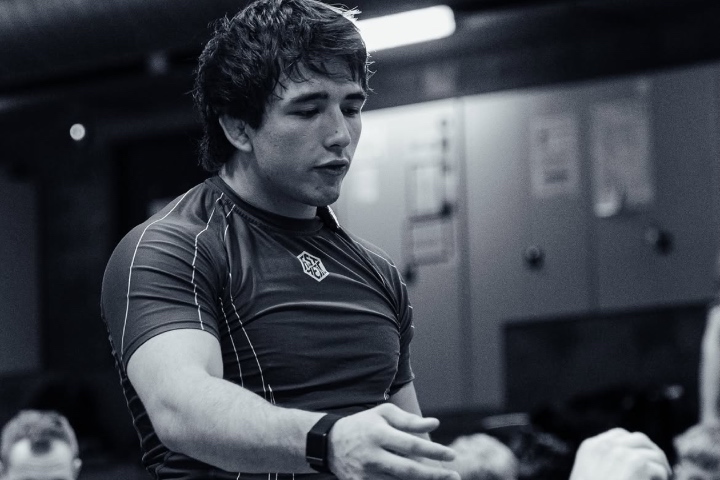
Jozef Chen became the youngest ADCC European Trials champion at 19, and if you're looking for the secret, it has nothing to do with a hidden guard system or a genetic gift for grappling. By his own account, Chen came to Jiu Jitsu in Nanjing with no athletic background at all. What he built instead was a method, a specific, repeatable way of turning mat time into actual skill, rather than just hours logged.
That method has a name in the sports-science world: deliberate practice. It's the idea, popularized well outside of combat sports, that improvement comes from targeted repetition against your specific weaknesses, with constant testing of whether what you think you know actually holds up, rather than simply doing a skill over and over. Chen describes something closer to falling into this concept than adopting it as an experiment, because BJJ was the first pursuit that ever hooked him.
Why instructionals alone don't make you better
The part of Chen's approach worth sitting with is his filter for information. Plenty of grapplers watch a technique on an app or a YouTube video and file it away as "learned." Chen treats that as backwards. In his telling, an instructional only becomes useful once he's felt the underlying problem on the mat himself:
> "If I have something from training and I've experienced it and it feels like there's something there, and that can often come from me watching an instructional, then I write it down. I'm not going to watch an instructional and just write it down without having experienced it per se, because I find that there's too much disconnect there for me to actually be able to use any of it," Chen told BJJEE.
That's a small distinction with a big consequence. It reverses the usual order of operations: instead of watch then try, Chen tries first, then watches to make sense of what he already felt. For the average BJJ hobbyist drowning in a library of instructionals, that's a genuinely useful filter: information sticks when it answers a question your body already asked.
Training games that expose the gaps open rolling hides
The second piece of Chen's system is arguably the more interesting one for coaches. Rather than relying purely on free sparring, his coach builds restricted training games designed to isolate a specific problem. One example Chen described: starting in side control while the bottom player tries to turtle, with the top player forbidden from using chest-to-chest pressure. Take away the easiest tool in the box, and whatever's left has to actually work.
Chen's reasoning for why this matters gets at something a lot of intermediate and advanced Jiu Jitsu players quietly know but rarely say out loud, that open rolling can hide weaknesses as easily as it reveals them. Grapplers build strong offense from their favorite positions and never get forced out of them, so a real hole in guard retention, for instance, can sit undiscovered for years because the guard offense papers over it. A restricted game strips that camouflage away and makes you solve the actual problem, not the comfortable one.
It's a lesson with obvious value up and down the belt ranks. You don't need an ADCC-level coach to run a version of this at your own gym, starting a round from a slightly worse position, or removing your go-to grip, does the same job of forcing creativity where habit used to live.
Structure with room to breathe
What keeps Chen's approach from sounding like a rigid training-log obsession is his own admission that too much rigor backfires. He's said that when he gets overly locked into a specific intent for a session, he gets bored and starts craving something else to explore. That's worth remembering before anyone reading this goes home and tries to turn every roll into a controlled experiment. The deliberate part of deliberate practice is about testing ideas honestly, not about squeezing the play out of Jiu Jitsu.
Chen's rise has been fast by any measure, and it's tempting to chalk that up to talent alone. But talent doesn't explain a training philosophy this specific, or a young athlete already able to articulate why he learns the way he does. For anyone stuck in a plateau, hoarding instructionals they've never actually tested against a real opponent, or grinding standard rounds that never surface their actual gaps in Jiu Jitsu, Chen's approach is a clear, practical place to start looking.
See you on the mats.
Original report via BJJEE.