Nurse Uses BJJ to Stop an Attack, and Raises a Bigger Question
A story making the rounds this week is a familiar shape to anyone who's spent time around BJJ: an intoxicated, aggressive person attacks someone who turns out to have a decade of Jiu Jitsu behind…
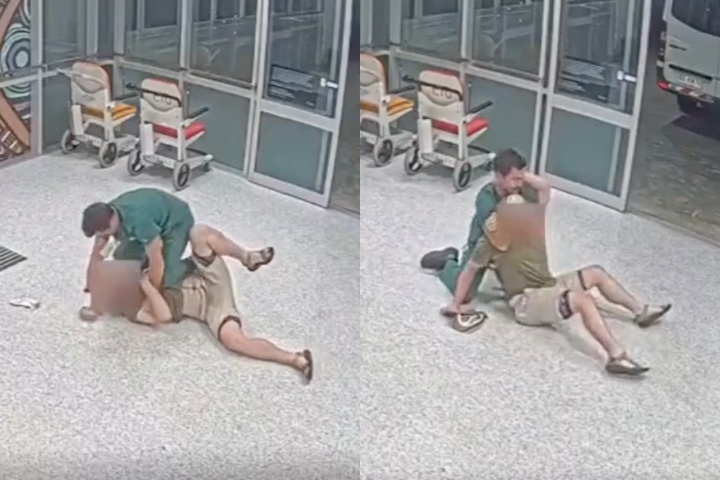
A story making the rounds this week is a familiar shape to anyone who's spent time around BJJ: an intoxicated, aggressive person attacks someone who turns out to have a decade of Jiu Jitsu behind them, and the fight is over before it really starts. But the details behind this one are worth slowing down for, because they say less about one nurse's toughness and more about a problem the whole healthcare industry is quietly living with.
According to a report from BJJEE, the incident happened at Royal Brisbane and Women's Hospital in October 2024. Daniel Nelson, a registered nurse working the overnight shift in the Emergency Department, had been dealing with an intoxicated patient who was spitting on the floor and abusing staff. Nelson escorted him out and stepped away to grab a coffee from a van parked outside, and that's when the man, in Nelson's words, decided he wanted "a cuddle." What the patient didn't know was that Nelson had been training BJJ for more than ten years. The attempted assault ended almost as soon as it began, with Nelson controlling the situation calmly and without injury to either party.
Why this is a BJJ story, not just a viral clip
It would be easy to file this under "tough guy defends himself," but that misses what actually makes Jiu Jitsu relevant here. A nurse can't respond to an aggressive patient by striking them, legally, ethically, or professionally, that's not an option, no matter how justified the fear in the moment. What a healthcare worker needs is the ability to neutralize a threat without causing serious harm, while staying composed enough to keep making good decisions. That is, almost exactly, the promise Brazilian Jiu Jitsu was built on. Positional control, clinches, take-downs that don't require power, and the ability to hold someone safely until help arrives, this is the exact toolkit BJJ has been refining since Helio Gracie first proved that skill could neutralize size and aggression without needing to match it. Nelson didn't need to hurt his attacker to stop him. He needed leverage, calm, and ten years of reps. Jiu Jitsu gave him all three.
The part of the story that matters more than the takedown
What stands out most, though, is what Nelson said afterward. Sharing the story on Facebook, he was clear that he wasn't looking for praise: "I laughed about it then and now because I was able to defend myself. But that's not the point. What if he'd picked a nurse half my size? A new graduate? A student? Someone who simply couldn't defend themselves? Violence against healthcare workers isn't 'just part of the job.' It's unacceptable. Alcohol is no excuse."
That's the real story. Emergency departments around the world are dealing with rising rates of assault against staff, and most nurses, techs, and orderlies have nothing close to Nelson's grappling background. The uncomfortable truth is that healthcare workers are frequently alone with unpredictable, sometimes violent people, often at 2 a.m., often with no security nearby, and the industry's answer has largely been de-escalation training and hope. De-escalation matters and works most of the time. But "most of the time" isn't good enough when the alternative for the other outcomes is a nurse getting hurt.
What the rest of us should take from it
Nobody is arguing that every nurse needs to become a purple belt. This is a reminder of something the Jiu Jitsu community already believes and should say more often: BJJ is one of the most practical self-defense tools available to people who, by the nature of their jobs, cannot fight back the way an untrained person instinctively would. Teachers, healthcare workers, security staff, hospitality workers who deal with the public late at night, these are exactly the people who benefit most from real grappling skill, because their options for handling aggression are more constrained than most people's, not less.
If you train BJJ, this story is a small nudge to think about who in your life might need what you have, a partner in healthcare, a friend who works nights, a family member in a job where "just walk away" isn't always possible. An invitation to a beginner class costs nothing and occasionally changes the outcome of someone's worst night at work.
Nelson got lucky that his years on the mats were there when he needed them. The point of his story is that he shouldn't have to be exceptional.
See you on the mats.
Original report via BJJEE.