BJJ Coach Alcenor Alves Sentenced to 178 Years for Athlete Abuse
A Brazilian court has handed BJJ black belt Alcenor Alves a 178-year prison sentence after convicting him of sexually abusing multiple young athletes under his coaching across more than a decade.…
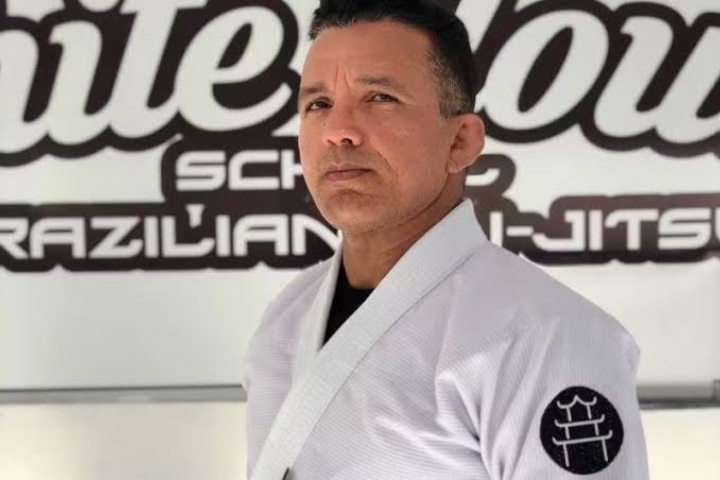
A Brazilian court has handed BJJ black belt Alcenor Alves a 178-year prison sentence after convicting him of sexually abusing multiple young athletes under his coaching across more than a decade. The 57-year-old was arrested in November 2024 at a Jiu Jitsu tournament in Itajaí, Santa Catarina, after three of his former students walked into a police station in Manaus and put their names to formal complaints. The investigation that followed identified at least 12 victims.
It is a sentence that looks symbolic — no one serves 178 years — but in Brazil, where penalties for serial offences are stacked rather than concurrent, the number is the court's way of saying out loud what the case file already said quietly: that this was systematic, that there were many victims, and that the trust of a coach was the lever every single time.
A trust the sport hands out by default
If you train BJJ, you've handed a coach more access than you'd give most people you've known for years. They put hands on you. They tell you when to push and when to back off. For young athletes — the ones travelling to opens with a coach because their parents can't afford the trip, the ones whose entire competition season runs through the academy's WhatsApp group — that access expands fast. Coaches become the person who buys the gi, books the accommodation, signs the entry, manages the weight cut. The relationship is closer than school. It can be closer than family.
That's exactly the architecture investigators say Alves exploited. According to authorities in Amazonas, the abuse ran from 2011 to 2018 and was concentrated on athletes from economically vulnerable backgrounds. Prosecutors allege he made himself indispensable to those families first — covering travel, kitting kids out in kimonos, footing the bill for tournaments — and then used that position to isolate the kids he was supposedly mentoring. The IBJJF and CBJJ banned him from their organisations after his arrest. That is the right outcome, and it is also a long way from prevention.
Why this matters to the rest of us
It is easy to read a story like this and file it under "thank god my academy isn't like that." That instinct is worth resisting. Brazilian Jiu Jitsu has spent fifteen years professionalising in every direction — better instructionals, better tournaments, better gear — and very little of that energy has gone into safeguarding. Most gyms still don't run background checks. Most don't have a written policy for one-on-one coaching with minors. Most don't have an obvious off-ramp for a student who needs to report something about an instructor and doesn't want to walk back into the same building on Tuesday night.
In a sport where the head coach is often the owner, the lead competitor, the social hub, and the person handing out promotions, that absence of structure is a problem. Power concentrates fast, and the people best placed to see warning signs — other coloured belts, parents, longer-tenured students — are often the same people most invested in not seeing them.
There were warnings here. The case took years to surface because, as is almost always true in these cases, victims were young, isolated, and dependent on the very person who was hurting them. BJJEE's report quotes investigators noting that the evidence went beyond testimony: "We do have material evidence in this regard, and I would also like to emphasize that he is an individual who knows he is wrong, but continues to do so." Three former students, including Matheus Gabriel, are the reason any of it came to light. That took extraordinary courage. It should not have been the only mechanism available.
What an academy can actually do
If you run an academy — or you're a senior belt at one — there are a handful of things worth getting in place before you ever need them. None of them are exotic.
- A written policy on coaching minors: no one-on-one closed-door sessions, no private messaging with kids on personal accounts, parents copied on everything.
- A named safeguarding contact at the gym who is not the head coach, so a student has somewhere to go that isn't through the person they might need to report.
- Background checks on anyone teaching kids, including visiting black belts running camps.
- A clear, public statement that the gym believes complainants and will not retaliate. Say it on the website. Say it on the wall.
If you train at an academy without any of this, it is reasonable to ask why. Most owners will be glad of the prompt.
The Alves case is a Brazilian court doing its job, late but completely. It is also a mirror the rest of the BJJ world should be willing to look into. Jiu Jitsu is a small, deeply connected community — that is part of what makes it the best thing many of us do all week. The same connectedness is what lets a coach like Alves operate in plain sight for years. The fix is structural, it is unglamorous, and it is overdue.
See you on the mats — and look out for the people next to you.
Original report via BJJEE.