Ben Eddy's ADCC Slam Is a BJJ Safety Wake-Up Call
The BJJ community spent the weekend watching a clip nobody wanted to see twice. At the ADCC Dallas-Fort Worth Open 2026, 10th Planet veteran Ben Eddy climbed onto a much larger opponent's hips in…
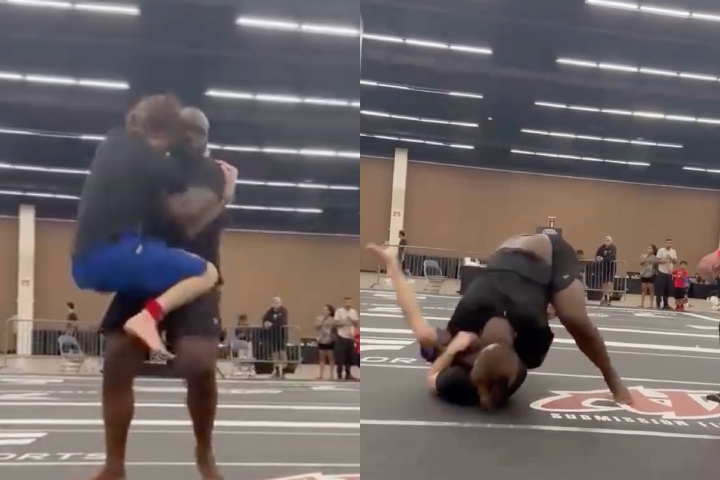
The BJJ community spent the weekend watching a clip nobody wanted to see twice. At the ADCC Dallas-Fort Worth Open 2026, 10th Planet veteran Ben Eddy climbed onto a much larger opponent's hips in overtime and got driven into the mat in one of the heaviest illegal slams Jiu Jitsu has seen on camera in months. The Instagram footage is the kind that makes a room go quiet. Watch the moment on Instagram and then keep reading, because the more interesting story is everything that led to it.
Eddy, one of the most recognizable names ever to come out of Eddie Bravo's 10th Planet system and the inventor of the Hindulotine, was having a strong tournament. According to BJJEE's report he had already gone 4-1 in the under 70kg division, picked up a bronze medal, and finished every one of his four wins by submission. He then chose to enter the absolute division as well, won his opening match, and met a blue belt named Jakori Savage in round two — a competitor who had spent his morning fighting at over 100kg.
That weight gap is where the trouble started. The slam itself is where the conversation needs to.
What actually happened
In overtime, Eddy did what a small, technical 10th Planet guard player does to a much bigger opponent: he jumped up to attack from the standing position, looking to ride a body lock or work into a back-take. Savage, instead of riding the position out or trying to peel him off, lifted Eddy clean off the floor and drove him into the mat. The referee disqualified him on the spot. Medics were called to check Eddy over.
That is, by any reading of the IBJJF or ADCC rulebook, an illegal slam. Once a player has both feet off the mat in a closed or attacking position, the standing partner is required to lower them to the ground in a controlled way — never spike them. Brazilian Jiu Jitsu has the rule because the alternative is exactly what we saw on Sunday: a smaller athlete's neck and spine taking the full kinetic energy of a heavyweight's adrenaline.
The good news, which is the only news that really matters, is that Eddy walked away. He posted afterwards that he was fine, then took the kind of self-deprecating angle only a lifer in Jiu Jitsu would take, joking that "it probably wasn't smart of me to jump up there and ask for it." Classy, but it dodges the real point: he was on the receiving end of a foul, full stop. The duty to slam safely is on the person doing the lifting.
The absolute division problem nobody wants to fix
Here is the awkward truth the sport keeps stepping around. Open-weight brackets at amateur opens are a known hazard. They put 70kg black belts who have been training for fifteen years across from 100kg-plus blue belts who have been training for fifteen months, in the same overtime ruleset, with the same submissions on the table. The technique gap is supposed to make it fair. It usually does — until it doesn't.
This isn't a hit piece on the absolute division. Watching a small, sharp grappler outsmart a bigger one is half the romance of Brazilian Jiu Jitsu — the Mendes brothers and the Miyao twins built careers on it. That lineage works because the senior partner in those matches understands that brakes matter more than brilliance.
When the larger athlete is a blue belt with limited live experience and a body that hasn't yet been taught what heavy and controlled feels like in a panic, the brakes aren't there yet. Reflex takes over, and the reflex of a heavyweight is often to throw weight. Once Eddy was airborne, the safe answer was a careful descent. The unsafe answer was the one that ended the match.
What the average Jiu Jitsu player should take from this
Two things are worth carrying into the gym this week.
The first is for everyone who lifts. If a smaller training partner climbs onto you in standing — guard pull, body lock, back ride from a takedown defense — you own them in the air. There is no honest excuse for spiking a partner, even in competition, even in overtime, even if they "asked for it." Lower them. Lose the round. The mat owes you another round next month; a broken partner doesn't.
The second is for everyone who's tempted by an absolute bracket on top of their weight division. Eddy is a phenomenal grappler and he still got hurt. Read the bracket. Look at the blue belts checking in at the cage in singlets that don't quite fit. Decide what your knees, neck, and Monday-morning self can actually pay for a bronze.
Ben Eddy is fine. The next person might not be. The job of the BJJ community, every time one of these clips lands, is to talk about the rule like adults — and to keep welcoming the small, technical players who make our sport beautiful onto mats where they don't have to gamble with their spines to compete.
See you on the mats.
Original report via BJJEE.