Rodolfo Vieira's Pressure Passing: A BJJ Masterclass
There are prettier guard passers in Brazilian Jiu Jitsu than Rodolfo Vieira, but there may never have been a heavier one. In his prime at GF Team, "The Black Belt Hunter" chained together IBJJF…
Words: Jiu Jitsu Style
There are prettier guard passers in Brazilian Jiu Jitsu than Rodolfo Vieira, but there may never have been a heavier one. In his prime at GF Team, "The Black Belt Hunter" chained together IBJJF world titles and an ADCC gold with a game that looked almost unfair, a low, grinding, chest-to-chest march through the best guards on the planet. He didn't dazzle you with angles. He put his weight on you, took the air out of the room, and passed. His approach is still one of the cleanest templates in Jiu Jitsu for how top pressure is actually supposed to feel.
Watch it: Rodolfo Vieira's pressure-style guard pass.
The thing to understand about Rodolfo's passing is that it lived in the pin long before the pass. Before he ever cleared the legs, he'd already made the bottom player miserable, stapling a hip, flattening a shoulder, loading them with a weight they couldn't shrug off. Watch the footage and you stop seeing a sequence of techniques and start seeing a single, relentless idea repeated from every position: get heavy, stay connected, and let discomfort do the work.
Weight before movement, the BJJ pressure passing principle
The first lesson every serious top player borrows from Rodolfo is weight before movement. He didn't sprint around the guard hoping to find a gap; he settled his weight exactly where the guard player least wanted it and waited. By the time an actual pass happened, his opponent had already been carrying a load for thirty seconds and their frames were cooked.
You see the same constant in the best gi passers of 2026. Tainan Dalpra dismantling a guard at Worlds, Lucas Lepri still doing it deep into his career, the shared trait is a suffocating heaviness that arrives long before the pass does. Rodolfo just turned that dial all the way up. The lesson travels whether you weigh 60 kilos or 100: if the guy on the bottom is comfortable, you haven't started passing yet.
Kill the legs, then break the hips
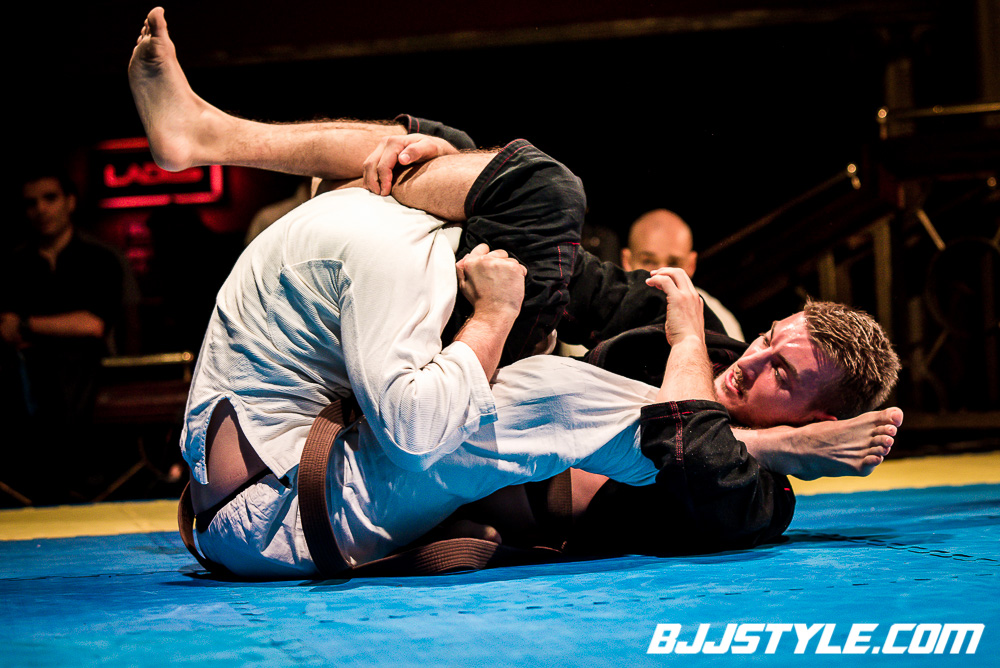
The second principle is kill the legs, then break the hips. Rodolfo treated the legs as the lock and the hips as the door. He'd pin a shin, staple a knee, and strip the frames one at a time before he ever tried to clear the body. Beginners get this backwards, diving past the legs while the hips are still live, then getting recovered on every single time. Rodolfo never let the hips reload; by the time he moved, the door was already open.
That same logic underwrites every serious passing system being taught today, from the leg-drag-and-staple game the Mendes brothers exported through Atos to the body-lock pressure the Ruotolo brothers use to walk through people in no-gi. Different eras, same skeleton: neutralize the legs, kill the hips, then pass into a pin you can hold.
And underneath all of it is the quiet, unglamorous truth that made Rodolfo so hard to deal with, posture and patience over flash. He was willing to hold a heavy, dominant position for as long as it took, baiting the bottom player into the frantic scramble that finally handed him the pass. Modern Jiu Jitsu, with its endless library of guard recoveries, punishes the impatient passer above everyone. The guy who forces it gets inverted on. The guy who waits, like Rodolfo, collects the pass when the guard player gives it away.
Stealing from the master
The best part about studying a passer like Rodolfo Vieira is how little of it depends on being Rodolfo Vieira. You don't need his engine or his ADCC medals to borrow the ideas. His competition matches are a tap away on YouTube, breakdowns of his game sit in every instructional app and on BJJ Fanatics, and the principles, heaviness, killing the hips, patience, cost nothing to drill.
So watch the footage the way he'd want you to. Watch the weight, not the hands. Watch how long he's willing to stay connected before he moves. Then take one idea, just one, into your next round and live in it for a week. The flashy passes come and go. Pressure, posture, and patience are forever.
See you on the mats.
Originally published by Jiu Jitsu Style (May 2016). Refreshed for 2026.