Rodolfo Vieira's Open Guard Pass: A BJJ Footwork Study
Open guard is where most of Brazilian Jiu Jitsu actually gets fought. A closed guard only opens once — after that, everything is legs, hooks, and angles, and the passer who can't solve open guard…
Words: Jiu Jitsu Style
Open guard is where most of Brazilian Jiu Jitsu actually gets fought. A closed guard only opens once — after that, everything is legs, hooks, and angles, and the passer who can't solve open guard never gets to show off anything else. Back when we first shared this footage of Rodolfo Vieira passing open guard, he was already the standard everyone else was being measured against, a multiple-time world champion whose feet moved as decisively as his hands. A decade later the clip still holds up as one of the clearest lessons in BJJ on how to beat legs with footwork instead of fighting them with strength.
Watch it: Rodolfo Vieira passing the open guard.
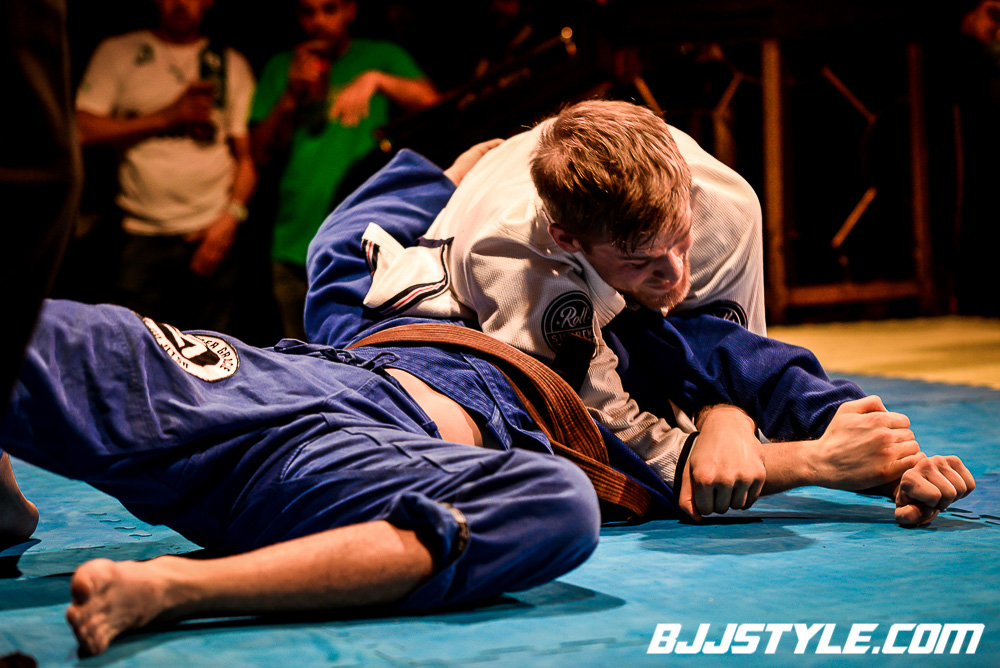
What jumps out watching Rodolfo work is how little of it happens on his knees. Open guard lives and dies on distance — the bottom player needs their legs at a certain length to frame, sweep, or attack, and Rodolfo's first move was almost always to break that distance with his feet before his hands ever got involved. He'd circle, cut an angle, circle again, forcing the guard player to keep resetting their legs until the frames got sloppy. Only then did he commit his weight and finish the pass. The hands pinned what the feet had already won.
Footwork first — the open guard BJJ passing lesson
The habit worth stealing is footwork before force. Most white and blue belts try to muscle through an open guard hook-first, shoving a knee past a leg that's still perfectly capable of resetting. Rodolfo treated his feet as the real passing tool — stepping to break an angle, stepping again to deny the recovery, and only sinking his weight down once the legs had nowhere left to go. By the time he was on the mat driving a knee slide or a toreando finish, the guard was already broken; the pass itself was just the paperwork.
You can watch the same footwork logic in the best open guard passers in Jiu Jitsu today. Tainan Dalpra circling out of a De La Riva hook at the Worlds, Mikey Musumeci cutting angles before a leg lasso ever locks in — different guards, same underlying idea: solve the distance problem standing up, and the pass on the ground becomes almost simple. It's a lesson that travels well past the gi, too, since the same footwork wins against open guard in no-gi grappling and MMA alike.
Hands finish what the feet start
Once Rodolfo had cut the angle he wanted, his hands did exactly one job — control the legs, not chase them. He'd pin a shin to the mat or trap a knee against his hip rather than swat at a moving target, because a leg that's pinned can't reset and a leg you're grabbing usually can. That's the second half of passing open guard: footwork earns the angle, hands make it permanent. Skip the first step and you're fighting the guard on its own terms all night.
Stealing it for your own game
None of this requires Rodolfo's size or his black belt trophy case. Next open guard you're stuck in front of, resist the urge to dive — circle first, cut an angle, and only commit your weight once the legs have run out of room to reset. His full breakdown is still out there on YouTube, and the same open guard passing principles get taught in fresh detail across BJJ Fanatics and every serious instructional app running today. The guards keep evolving. Good feet still beat them.
See you on the mats.
Originally published by Jiu Jitsu Style, 1 June 2017. Refreshed for 2026.