Reverse Seoi Nage with Travis Stevens for BJJ
The reverse seoi nage has gone from judo-highlight curiosity to one of the more copied entries in competitive Jiu Jitsu, and few people did more to carry it across than Travis Stevens, the man…
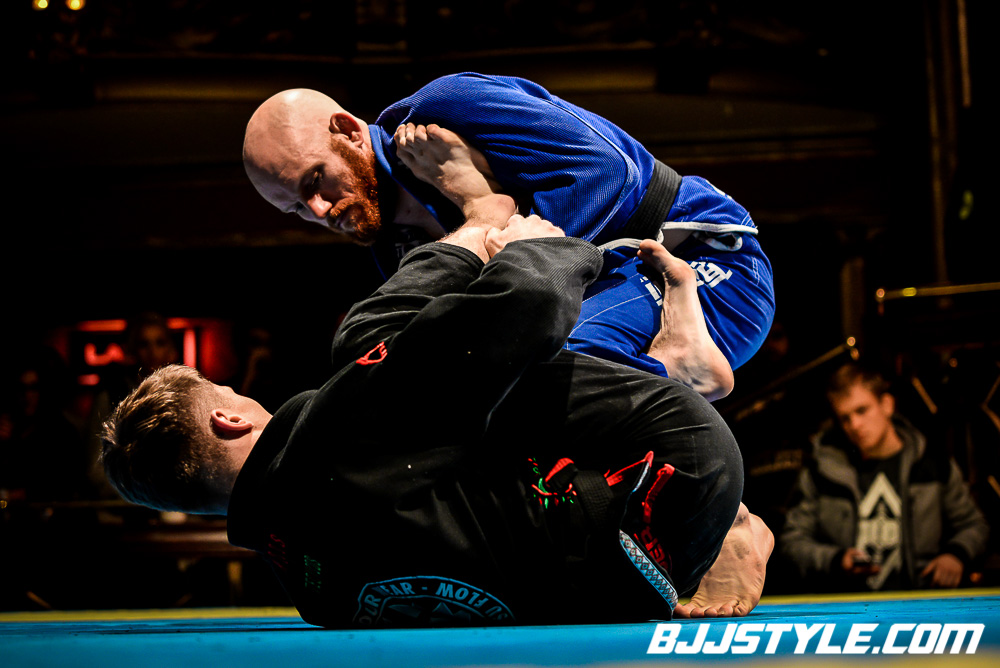
Words: Jiu Jitsu Style
The reverse seoi nage has gone from judo-highlight curiosity to one of the more copied entries in competitive Jiu Jitsu, and few people did more to carry it across than Travis Stevens, the man demonstrating it here. Stevens, two-time Olympian, Olympic silver medalist in judo at Rio 2016, and a BJJ black belt under John Danaher, is the perfect person to show a room full of gi players how a drop-shoulder throw actually works.
For anyone meeting him for the first time, Stevens is one of the rare athletes to have reached the very top of two grappling sports at once. He fought for the United States at the London and Rio Olympics, took silver at -81kg in 2016, and earned his Jiu Jitsu black belt training under Danaher alongside the group that would go on to reshape the leg-lock game. That combination is exactly what makes the clip worth re-watching now. He isn't a judoka guessing at what a Jiu Jitsu player needs, and he isn't a BJJ coach borrowing a throw off YouTube. He lived in both rooms, and the reverse seoi nage is the throw he trusted under Olympic lights.
Why the reverse seoi nage suits a Jiu Jitsu player
Seoi nage, the shoulder throw, is a judo staple, and the standard version asks you to turn your back on your opponent, drop under their center of mass, and load them across your shoulders. The reverse version flips the entry: instead of spinning your back in, you keep your chest more open and attack across the body, which is often faster to hit and harder for a grip-fighting opponent to read. For a Jiu Jitsu player that difference matters. You spend far less time exposed with your back turned, the entry lives off grips you already fight for, and, crucially, the throw dumps your opponent in front of you rather than stranding you in a scramble.
That last detail is the whole reason a throw like this belongs in a BJJ curriculum. A lot of judo transfers beautifully to the mat and some of it doesn't; the techniques that survive are the ones that finish in a position a gi player already knows how to use. The reverse seoi nage lands you chest-to-chest, driving into side control or the top of turtle, with your grips intact and your opponent flat. There's no leg entanglement to navigate on the way down and no turtle-scramble to lose. In the clip, that's the part Stevens keeps returning to, not just how to throw, but where you end up when it works.
The details that make it work
Watch Stevens's body and the throw looks almost lazy, which is the tell of someone who has hit it ten thousand times. The kuzushi comes first, a short, sharp break of the posture so your opponent's weight is already committed before you turn in. His entry is low; the knees bend and the hips drop under the opponent's center of mass rather than the throw being muscled off the arms. The grip stays glued through the rotation, because the moment you release you hand your opponent their base back. And the finish is a rotation rather than a lift: you spin them over a fixed point instead of deadlifting them off the floor.
The mistakes are the same ones every gi player makes the first month they try it. Standing too tall on the entry, so the hip never gets under the opponent and they ride the turn-in like a piggy-back. Trying to throw with the arms instead of the legs and hips. Letting go of the grip on the rotation, which puts your opponent on their feet instead of their shoulder blades. Stevens's body in the clip is the corrective for every one of those errors, watch his knees on the entry, watch his hips get under, watch the grip stay attached all the way through the landing.
The takeaway hasn't changed
The case Stevens was quietly making has more or less won. ADCC's evolving ruleset has put a real cost on a lazy guard pull, and the IBJJF's standup penalties have done the same on the gi side. The result is a generation that takes the first phase of a match seriously, the Ruotolo brothers happy to open a final on their feet, Nicholas Meregali hunting cross-grip entries, Ffion Davies carrying a genuine judo game into the women's divisions at the very top. Stevens himself now spends his life teaching judo to Jiu Jitsu rooms full-time, and drop-shoulder throws that once looked exotic are on club curriculums everywhere.
For the rest of us, the lesson stands. You don't need to become a judoka to use judo. You need one or two throws that fit your body, a grip game that doesn't crumble the first time someone fights for the lapel, and the patience to drill the entry until it costs you nothing to commit. The reverse seoi nage is a fine one to steal. Drill the kuzushi until your partner is genuinely off-balance before you turn in. Drill the entry until your knees bend without you thinking about it. Watch the clip with a notebook, instructional apps and YouTube have made stealing details easier than it's ever been, and a judo room one night a week will accelerate the rest. The first phase of every BJJ match is either something that happens to you or something you do, and Travis Stevens is still a fine man to show you what "something you do" looks like.
See you on the mats.
Originally published in Jiu Jitsu Style, 5 August 2016. Refreshed for 2026.