Michael Liera Jr.'s BJJ Sit-Up Guard Knee Cut Pass
When this Michael Liera Jr. clip first ran on Jiu Jitsu Style in March 2015, the caption underneath it was one line long: nice pass from a rising Atos star. That was enough at the time. Liera was…
Words: Jiu Jitsu Style
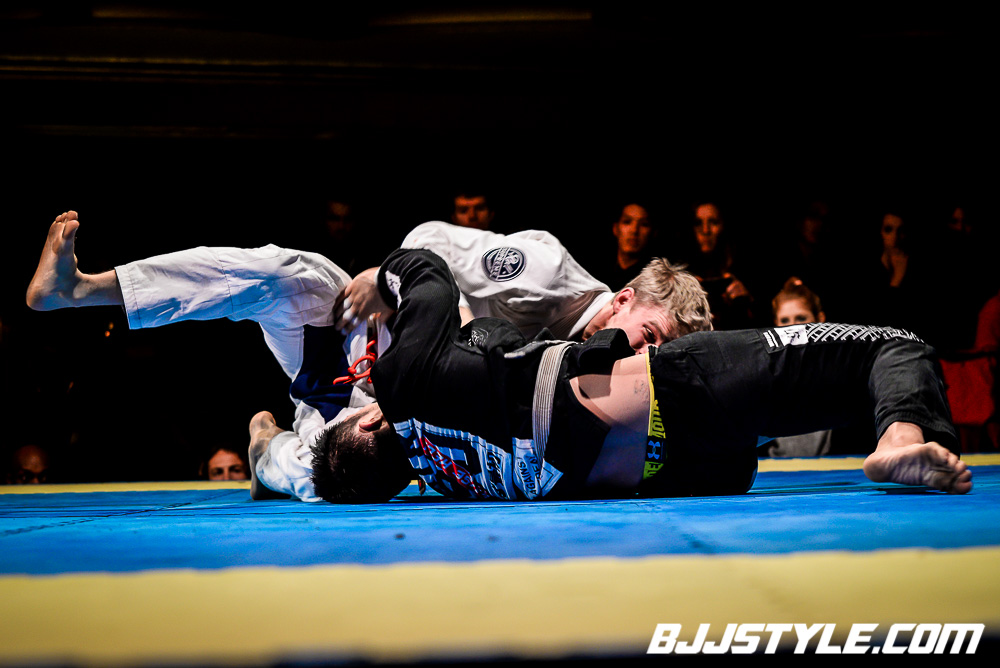
When this Michael Liera Jr. clip first ran on Jiu Jitsu Style in March 2015, the caption underneath it was one line long: nice pass from a rising Atos star. That was enough at the time. Liera was a brown belt with a competition record that already read like the early CV of a future Worlds medallist, Atos was deep into the run that would define the decade of IBJJF Jiu Jitsu, and the sit-up guard was still mostly thought of as a thing De La Riva players sat in while they decided what to do next. Eleven years on, the line has aged better than the caption did. The pass on screen is the pass the whole sport now turns to when it stares down a tough seated bottom player.
The shape of what Liera shows is deceptively simple. Your training partner sits up to a strong base — back hand posted, lead leg cocked, the inside shin pressed against your hip in the classic sit-up frame. You don't engage the framing leg the way most people instinctively want to. You lean into it for a half-beat, get a real grip on the trapped knee, and then slide your own knee diagonally across the line of his hip, dragging his lead leg into the floor with you. By the time he registers the angle, your hip is already past his and your weight is sitting in his armpit. The sit-up guard hasn't been countered so much as folded into the cut — its own frame is the rail your knee runs along. It is a pass, in other words, that beats the position by accepting it.
Why a 2015 Atos clip still teaches the modern BJJ knee cut
The headline answer is that the knee cut has spent the last decade walking from one option among many to the default pass of competitive Jiu Jitsu. When Liera filmed this, the torreando and the over-under were still the passes most black belts opened with at Worlds. Now the bracket runs through the knee cut. Lucas Lepri, Felipe Pena, Isaque Bahiense and Tainan Dalpra have between them built a body of work that treats the cut as the spine of a passing game, with everything else — the leg drag, the body lock, the long-step — feeding into it or off it. Mica Galvao won his black-belt Worlds title leaning on the same picture Liera drew on a phone in 2015. The Atos line of teaching has stayed remarkably consistent across the generations: pressure the inside knee, take the angle, finish in the cross-face. Liera's clip is one of the early entries in that lineage on video.
The sit-up guard side of the question has moved too. Mikey Musumeci and Cole Abate hunt sit-up entries to leg attacks; Andy Murasaki and Diogo Reis use the position as the doorway into modern berimbolos and back takes. The bottom player has more tools than he did in 2015, which means the top player needs the answer to be cleaner, not flashier. The knee cut is still that answer, for the same reason it was the answer eleven years ago: it shortens the distance the bottom player can use, it closes the hip line he's trying to invert under, and it ends in a position — chest-to-chest, far underhook in, knee through — that the entire IBJJF rulebook still rewards.
What Liera's details still teach the rest of us
Strip the bracket and the belts out of it and the lesson sitting under the clip is the lesson every serious Brazilian Jiu Jitsu passer eventually arrives at. The knee cut isn't a single technique. It's a piece of geometry that pays you back for every honest hour you spend on the inside line. Liera's hands aren't doing anything tricky. The grip on the knee is firm and low. The cross-face hand is patient. The hips do the work. The pass succeeds because the angle is correct and the weight is honest — not because the speed is unusual or the timing is special.
Drill the entry from the positions you already train against: De La Riva, single-leg X, the classic sit-up frame Liera meets in the clip. Drill it slow enough that you feel where your knee has to land for the partner's hip to give up the line, and where it lands when you've cut too early or too late. Then drill the finish in the cross-face — the part most students under-rehearse — until the chest pressure arrives before the legs do, the way Atos teaches it. Watch the original clip back, eleven years late, and notice that the rising Atos star on screen was already doing what a generation of his teammates would later make the centre of the modern BJJ passing game. The pass hasn't changed. The rest of the sport has finally caught up.
See you on the mats.
Originally published in Jiu Jitsu Style, 21 March 2015. Refreshed for 2026.