Mental Imagery in BJJ
You may have heard of mental imagery in BJJ. What you may not realise is that you almost certainly use it already. If you run through your opening tactics in your head before a fight, if you watch…
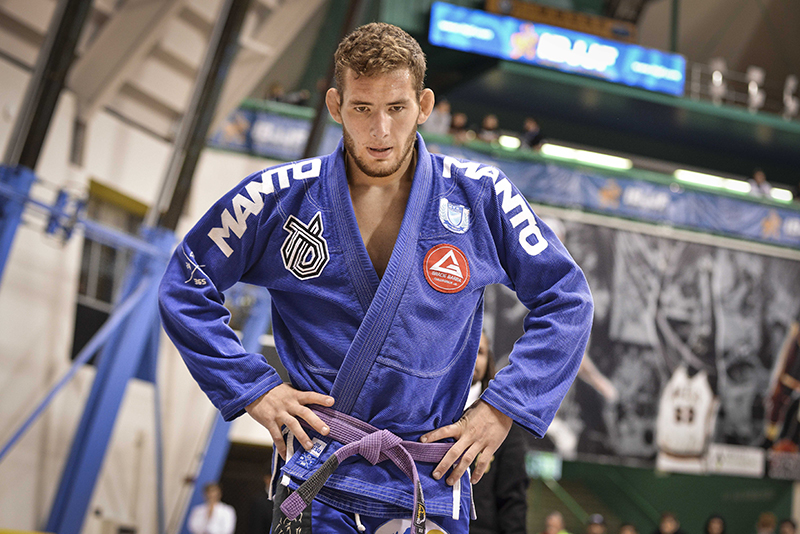
Words: Dr Rebecca Hill
You may have heard of mental imagery in BJJ. What you may not realise is that you almost certainly use it already. If you run through your opening tactics in your head before a fight, if you watch your instructor demonstrate a pass and then imagine how it would feel to do it yourself, if you picture how good it would feel to hit a new submission in sparring — that's imagery. Some people call it visualisation, others mental rehearsal. Whatever the label, it's about using your mind's eye to create or recreate Jiu Jitsu experiences.
So what can you actually use it for?
A whole host of things — from learning new skills to managing your thoughts and emotions in challenging situations. In a now-classic survey of elite athletes, sport psychologists Terry Orlick and John Partington found that imagery was a key tool behind peak performance, with 99% of athletes using the skill before competing at the Olympics. Two decades of newer research has only strengthened the picture.
What should I be imagining?
The content of your mental images depends on what you're trying to achieve. If you want to learn and refine specific skills, then you can use imagery to review that new guard pass you picked up at last weekend's seminar — a clean way to focus on the small details that separate a slick technique from a sloppy one. The same principle is why so many of us now study Gordon Ryan or Mikey Musumeci on our phones between rounds, then close our eyes and try to feel the movement before drilling it.
You can also use imagery to figure out your game plan. Research suggests athletes who use mental rehearsal to map their strategy execute it more accurately on the day. Picture your technique flows and watch yourself implement your game in sparring. It helps you to see the bigger picture and move beyond isolated techniques toward a more holistic understanding of how jiu jitsu fits together.
The benefits go beyond physical skill. Used regularly, imagery helps you gain awareness and a little more control over the mental processes that influence performance. Athletes who imagine achieving their goal tend to be more motivated, put in more effort and stick to their training plans — which becomes a kind of positive self-fulfilling prophecy.
If you want to feel mentally tough, picture yourself working through tough situations — an injury, a bad call from a referee — and handling them in a confident, level-headed way. Want to manage your emotions under pressure? Picture exactly that. You can mentally rehearse your pre-fight routines long before you step on the mat, so that when the day comes, your calm and collected approach feels like second nature. You might still feel nervous, but in your head you've already practised dealing with the nerves a hundred times over.
How does mental imagery actually work for Jiu Jitsu?
There have been various theories over the years. The one that has really stuck, drawn from neuroscience, is functional equivalence. Brain imaging studies have shown that when a person vividly imagines an action, they activate many of the same brain regions used when they actually perform it. Imagery is thought to strengthen the neural pathways that lead to improved technique and sporting performance — you really are training, even with your eyes shut.
Any tips for making the most of imagery?
Remember that it's much more than just mental rehearsal of a single move. Build images that use all the senses. To make your imagery as vivid as possible, pay attention to the sights, sounds, smells, tastes and emotions of jiu jitsu — the warm-up music, the chalk on the bar, the squeak of a fresh gi, the rolling cameras lining the mats at a Worlds or an ADCC trial. One sense that matters most for physical skills is kinesthesis — the sensation of bodily motion. Having a kinesthetic awareness gives you feedback on your movement and reinforces the right responses, so pay particular attention to the feel of a technique, not just what it looks like from the outside.
Like any skill, imagery improves with practice. Used on its own, it won't get you where you're going; the research is clear that physical practice plus mental practice is what produces the greatest gains. Unless you're built like the Ruotolo brothers, though, there's a ceiling on the amount of time you can spend on the mats. Imagery is a brilliant tool for the hours you're off them — on the train, queuing for a coffee, between sets in the gym, before you sleep, or while you're nursing an injury back to health.
Don't just take my word for it. Here's what Braulio Estima, Jiu Jitsu Style's very own BJJ Doctor, said just before he went and won ADCC 2011:
"I see myself doing what I was planning to do, and I see myself winning, and I see the crowd screaming for my name. And not only visualisation but the smell and the feel as well. I try to get my senses towards what I aim to do… like the taste of victory… the sweat… the feel of grabbing the technique I wanted to do… the feel of the achievement, how to control the fight, the feel of the crowd celebrating, my celebration."
Things turned out pretty well for him on that occasion. If it's good enough for the champion, it's surely good enough for the rest of us. See you on the mat.
Originally published in Jiu Jitsu Style by Dr Rebecca Hill — Sport and Exercise Psychologist chartered by the British Psychological Society, and a BJJ black belt competitor under Professor Victor Estima. Refreshed for 2026.