Liera Jr.'s X-Pass to Ezekiel Choke: A BJJ Combo
When we first posted Michael Liera Jr.'s X-pass to Ezekiel choke on Jiu Jitsu Style back in January 2016, the note under the clip barely ran two lines — Issue 30 was landing on shelves and the…
Words: Jiu Jitsu Style
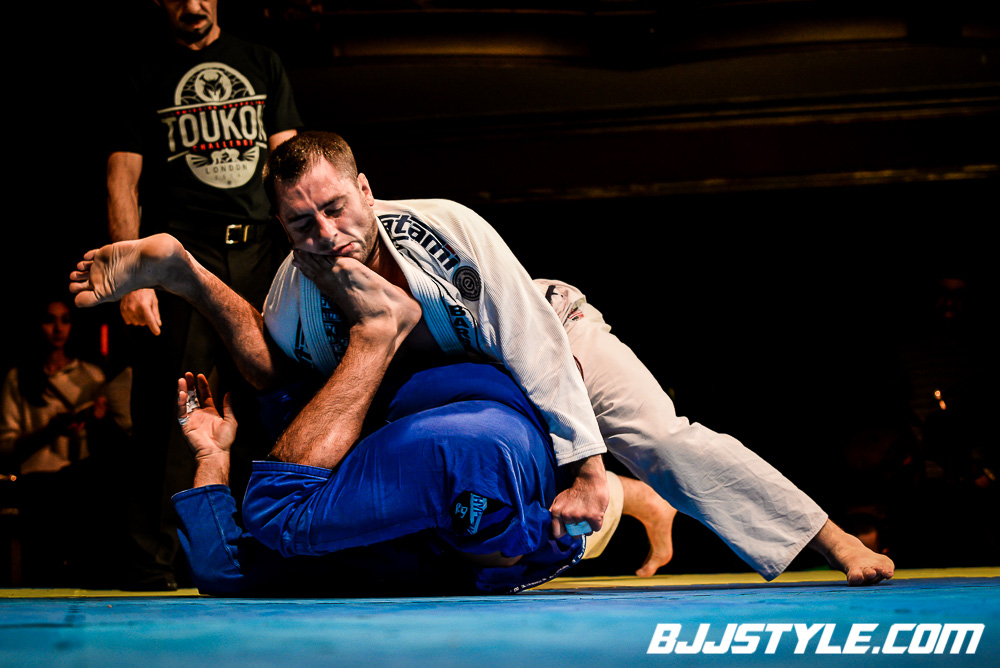
When we first posted Michael Liera Jr.'s X-pass to Ezekiel choke on Jiu Jitsu Style back in January 2016, the note under the clip barely ran two lines — Issue 30 was landing on shelves and the pass more or less spoke for itself. A decade on, it's worth the longer look, because this little sequence quietly captures one of the most underrated ideas in Brazilian Jiu Jitsu: the best passes don't end when you clear the legs, they end with a strangle already halfway locked. Liera was one of the sharpest young passers coming out of Atos at the time, and here he was stitching a modern toreando-style pass straight into one of the oldest gi chokes in the sport.
The X-pass is the pass most people learn as the "toreando" or bullfighter — you pin both of your opponent's shins or trouser cuffs, clear the legs to one side, and run your hips around to the far hip before they can reguard. Liera's wrinkle is that he never lets the top position settle into a stalemate. As his chest arrives on the far side and the near arm crosses the neck to control, that same arm is already feeding a sleeve. The pass and the choke aren't two moves. They're one motion, and the guy on the bottom is defending a strangle before he's even finished being upset that he got passed.
How the X-Pass Feeds the Ezekiel Choke
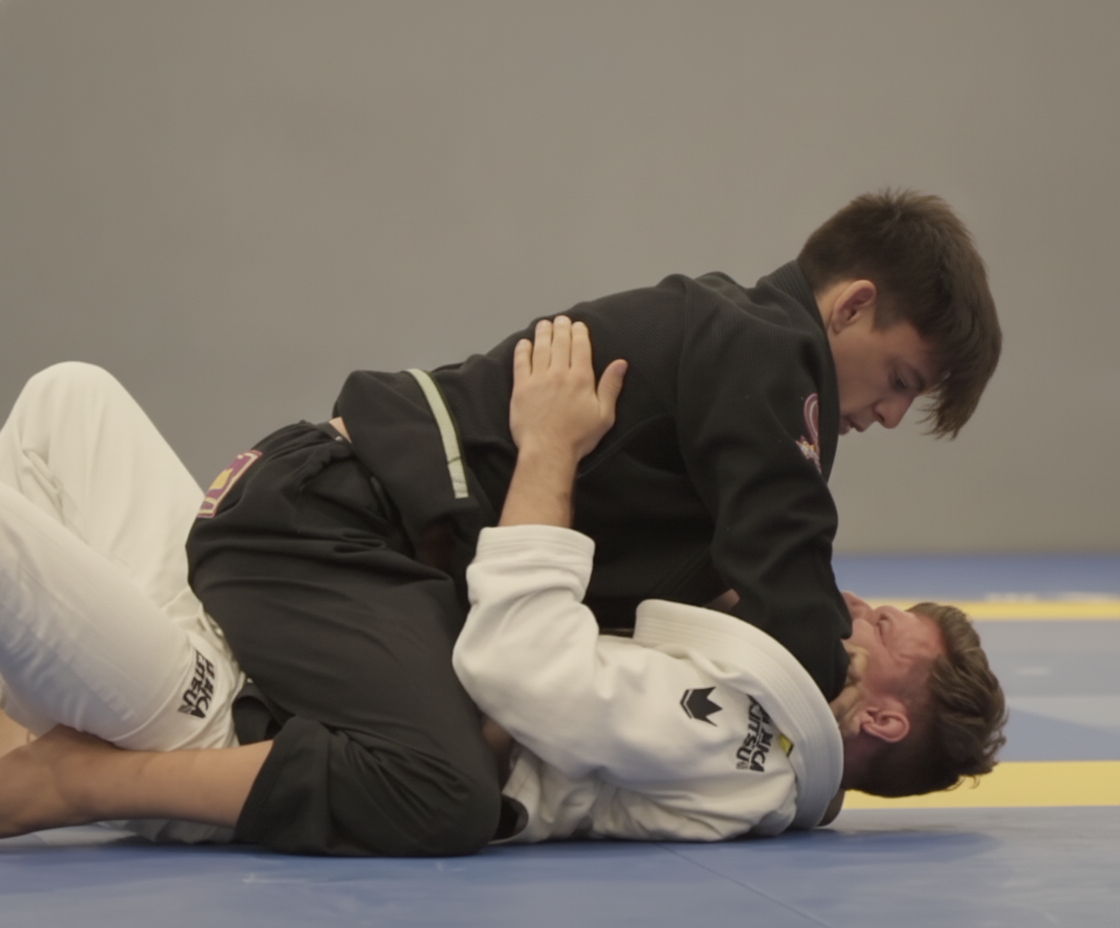
The Ezekiel — estrangulamento de manga, the sleeve choke — is the trap here, and it works because your opponent can't see it coming from where they're lying. As Liera clears the legs and drops his weight across the chest, his passing-side arm slides under the head or across the throat, and the free hand grabs his own opposite sleeve to lock the frame. From there the finish is the classic Ezekiel mechanic: the sleeved forearm saws across the near carotid while the trapped head closes the other side, and a short shrug of the shoulders finishes it. No re-grip, no scramble to mount — the choke lives inside the passing position itself.
What makes it a genuinely nasty combination in BJJ is the timing. The instant after a pass is when the bottom player is most vulnerable — hips flat, arms busy trying to frame back to guard, attention on the legs they just lost. Liera exploits exactly that half-second. Fight the choke and you feed the pass; fight the pass and you feed the choke. It's the same principle that runs through every good passer's game: give your opponent two problems that share one answer, and let them pick which one taps them.
Why This BJJ Combination Still Holds Up
Ten years on, the through-line from pass to submission has only become more central to how the sport is won. Tainan Dalpra passes and attacks in one breath the way Liera does in this clip; the Ruotolo brothers hunt strangles the instant they clear the legs; even in no-gi, the Ezekiel's front-headlock cousins show up the moment a scramble opens the neck. The gi Ezekiel itself never went out of style — it still catches world-class black belts from mount, side control, and, yes, straight off a pass, because your own sleeve is a weapon no amount of modern guard wizardry disarms.
For the rest of us, the lesson is the one hiding under every good technique breakdown: stop thinking of the pass as the finish line. Drill the X-pass until clearing the legs is automatic, then spend real time on the seam where the pass hands you the choke — the arm that crosses to control is the same arm that starts the Ezekiel. Learn to see that seam and you stop passing into stalemate and start passing into a strangle. That's the whole point Liera made in a two-line post back in 2016, and Jiu Jitsu has spent the decade since proving him right.
See you on the mats.
Originally published in Jiu Jitsu Style, 29 January 2016. Refreshed for 2026.