Leandro Lo's Toreando Pass: A BJJ Masterclass
[Watch Leandro Lo's toreando pass on YouTube](https://www.youtube.com/watch?v=HcrOBNTiYpg)
Words: Jiu Jitsu Style
Watch Leandro Lo's toreando pass on YouTube
When we first put Leandro Lo's toreando pass on Jiu Jitsu Style back in 2015, the caption was barely a sentence long — some great details on the toreando from Leandro Lo. It didn't need to be longer. Anyone who had watched Lo carve through an IBJJF bracket knew exactly what they were looking at: the cleanest bullfighter pass in the sport, performed by a man who built one of the greatest competitive guard-passing games BJJ has ever seen. Eleven years on, with Leandro gone far too soon, the clip plays a little differently. It's no longer just a technique breakdown. It's a record of how a master moved.
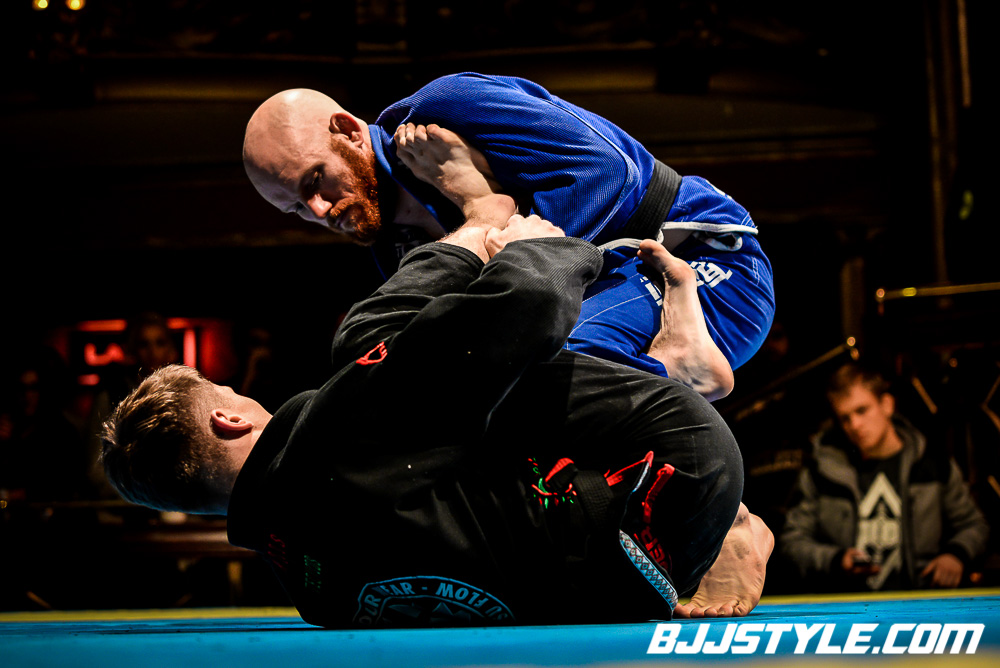
The toreando — the "bullfighter" pass, passagem de toureiro — is one of the first passes most people learn in Brazilian Jiu Jitsu, and one of the last most people ever truly master. The idea is simple enough to draw on a napkin: you grab the inside or outside of your opponent's pant legs, pin both knees to one side, and run your hips around to the other. The reason it looks so easy when Lo does it and so hard when the rest of us try is the same reason it's worth studying. The toreando isn't a grip and a sprint. It's timing, posture, and pressure stacked on top of one another in the right order.
What Made Leandro Lo's Toreando Different
Watch the old clip closely and the details Lo emphasised are all about control before movement. The grips come first — strong, low on the pants, elbows connected to his frame so the legs can't kick free. Then the pin. He drives both knees across to one side and kills the line of the hips before he so much as thinks about running. Beginners reverse that order. They sprint for the angle while the legs are still live, the guard player re-pummels a hook in, and the pass dies on contact.
The second thing Lo understood better than almost anyone was that the toreando is a question, not a command. He'd push the knees one way to bait the recovery, feel the bottom player commit, and pass the other way off the reaction. The grips stayed connected the whole time. That's the part that separates a flashy gym toreando from a competition-proof one — the pressure never leaves, so the guard player is always defending a fraction late.
Why the Toreando Still Matters in Modern BJJ
The modern passing game has drifted toward the knee cut, the leg drag and the body lock, and you'll hear people call the toreando a beginner's pass. They're half right. It is a beginner's pass — and it's also the pass Tainan Dalpra, Lucas Lepri and Mikey Musumeci still hit on the biggest stages in Jiu Jitsu, because nothing else opens up a panicking guard player quite as fast. The leg drag and the knee cut both feed off the same grips and the same hip-pinning principle Lo drilled in 2015. Learn the toreando properly and you've laid the foundation for half the passing systems being taught today.
There's also a lesson buried in it that has nothing to do with passing. Leandro Lo took a "basic" technique and refused to treat it as basic. He found a hundred small refinements inside a movement everyone thought they already knew, and that obsession is exactly why he became Leandro Lo. The toreando rewards the same patience from the rest of us. Drill the grips until they're automatic. Pin the knees before you run. Bait the recovery and pass off the reaction. The pass is timeless — and so, now, is the man who showed us how to do it right.
See you on the mats.
Originally published in Jiu Jitsu Style, 11 July 2015. Refreshed for 2026 in memory of Leandro Lo.