It's All About the Win. Or Is It? BJJ & Motivation
What's the single biggest factor in your BJJ performance? Quality coaching? Fitness? Diet? All of it matters, of course — but without one ingredient, none of the rest counts for anything. That…
Words: Rebecca Hill
What's the single biggest factor in your BJJ performance? Quality coaching? Fitness? Diet? All of it matters, of course — but without one ingredient, none of the rest counts for anything. That ingredient is motivation.
Motivation is what gets you doing jiu jitsu in the first place. Without it there's no mat time, no will to sharpen your skills, no drive to compete. You could have access to the best instructors in the world, but without motivation you wouldn't be in the room to learn from them. You could own the perfect strength-and-conditioning plan and never bother to follow it. Motivation quietly shapes nearly every choice we make about our training.
Quality of motivation beats quantity
The inspirational quotes that scroll past on your Instagram feed would have you believe it's all about how motivated you are — that it's a question of quantity. But what matters far more is the quality of your motivation. If we really want to reap the rewards, we have to look at what's driving us: why are we doing what we're doing?
One of the key forces behind motivation is competence. We want to be good at what we do. We want to be successful. Why else pour so much energy into getting better? But what does being successful actually mean? And how do we decide whether we're competent?
Performance goals and mastery goals in Jiu Jitsu
We all want to do well in jiu jitsu, yet we can define "doing well" in very different ways. Sometimes we feel successful when we win. Sometimes we feel successful when we learn something new or make real personal progress. Psychologist Andrew Elliot used the term performance goal to describe a focus on how we measure up against others, and mastery goal to describe a focus on self-improvement.
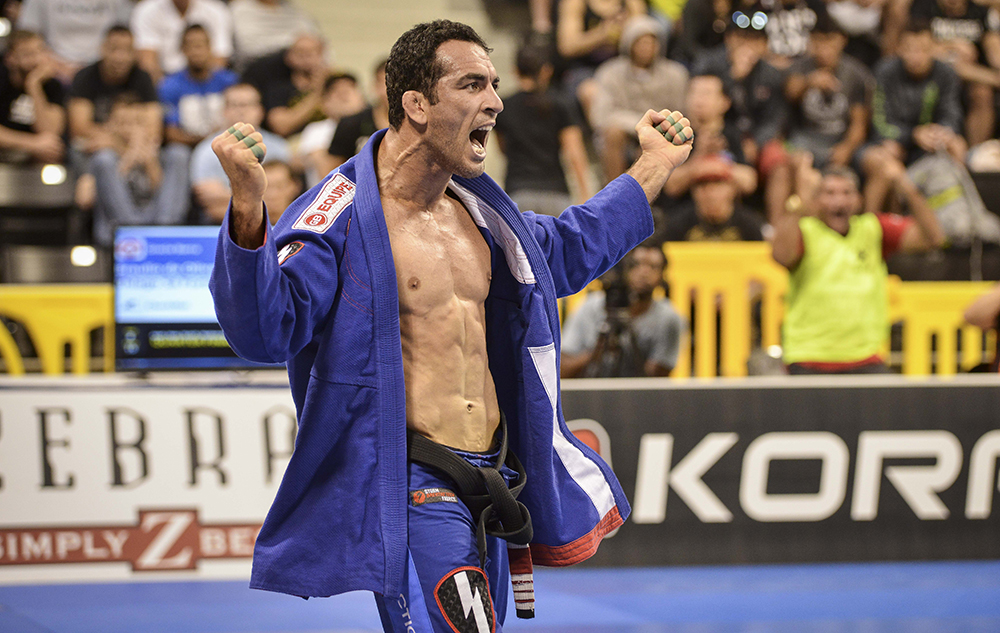
With a performance goal, when we beat other people, we feel competent. We enjoy the sport, keep putting in the effort, and tend to perform well in the short term. And let's be honest — you probably don't become a Mikey Musumeci or a Ffion Davies without badly wanting to be the one on top of the podium. The trouble is that with a performance goal, confidence and self-esteem can be fragile, mostly because there are so few chances to actually feel competent.
Take the World Championships. Each year there are a total of 17 opportunities for elite competitors to prove they're the very best. Beyond any doubt, those champions can rightly feel competent. But if we only define competence as winning, then by that logic the remaining 336 black belt men and women at the Worlds in 2012 were somehow not competent — despite putting on extraordinary displays of Brazilian Jiu Jitsu. Maybe that's just the nature of the game, and falling short can be exactly the sting you need to train that bit harder next time. But even the toughest athlete is bound to question themselves in the face of what looks like failure.
It's worth paying attention to the long-term effects of leaning too hard on a performance goal. Sport psychology research links them to a string of negative outcomes: competitive anxiety, fear of failure, low self-esteem, a willingness to cut corners, withdrawing effort the moment things go wrong, and ultimately dropping out of the sport altogether. A sole focus on how you compare to everyone else is a problem. Mastery goals, by contrast, tend to produce the good stuff — effort, persistence, enjoyment, confidence, generosity toward training partners, and, over the long haul, better performance. Mastery goals also go hand in hand with the belief that success comes from hard work and effort. That growth mindset is what fuels the dedicated practice great performance demands — and the evidence shows the most successful athletes carry both performance and mastery goals. We can borrow their approach to move beyond a single, largely uncontrollable end result and make the most of the daily reps that make up the bulk of our jiu-jitsu training.
What's your win for today?
When we also define success as improvement and personal progress, we can genuinely enjoy the process of learning, treat mistakes as part of the journey, see competition as a challenge rather than a threat, and respect the enormous role effort plays in building talent. There's no need to forget the gold medal. But next time you step on the mat, take a leaf out of the expert's book and ask yourself: "What's my win for today?" Ironically, you might find that centring on the process means the results take care of themselves. As All-American wrestler and IBJJF World Champion Kenny Johnson put it: "You've got to be able to stop and smell the roses. If you can't, there's absolutely no point in doing it."
Originally published in Jiu Jitsu Style by Dr Rebecca Hill — Sport and Exercise Psychologist, and a BJJ black belt under Professor Victor Estima. Refreshed for 2026.