Garry Tonon's BJJ Leglock Concepts
Garry Tonon was one of the young no-gi players who dragged leg locks out of the "dirty tricks" bin and showed the BJJ world a system with the same logic as any other part of Jiu Jitsu. His clip…
Words: Jiu Jitsu Style
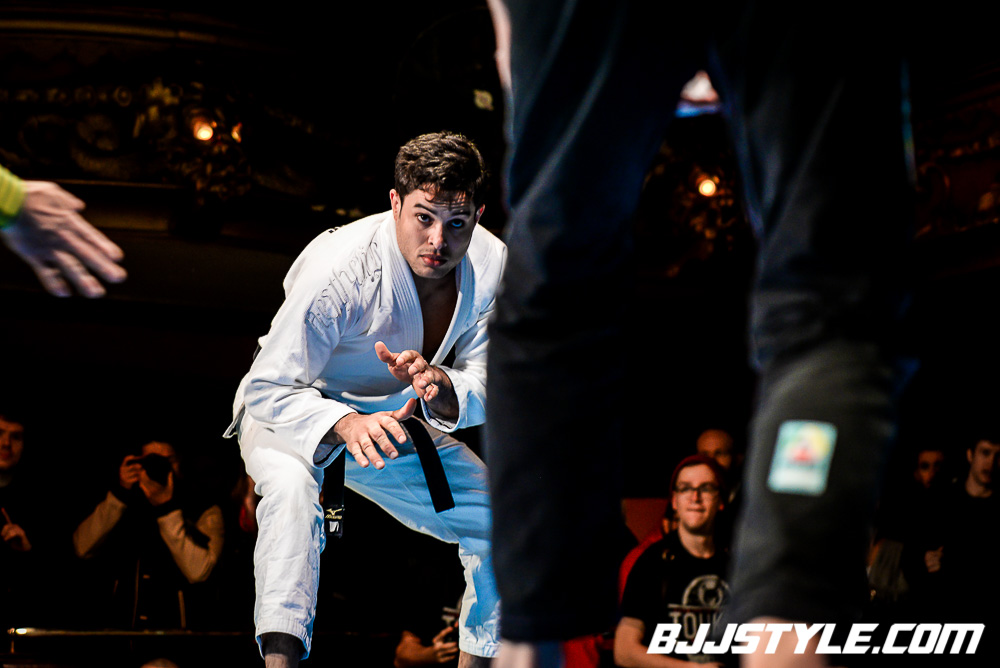
Garry Tonon was one of the young no-gi players who dragged leg locks out of the "dirty tricks" bin and showed the BJJ world a system with the same logic as any other part of Jiu Jitsu. His clip walking through his leglock concepts reads less like a highlight reel and more like a syllabus. What makes Tonon worth listening to is the thinking underneath the finishes, and here are the concepts that hold up.
Watch it: Garry Tonon's leg lock concepts.
Control comes before the submission
The single idea Tonon returns to more than any other is that a leg lock is a position rather than a scramble. Before you go hunting a finish you have to own the entanglement, ashi garami, the saddle, whatever the exchange gives you. That means pinning the hips, killing the free leg, and neutralizing your opponent's ability to spin out or stand up. In Brazilian Jiu Jitsu we already accept this everywhere else: you don't chase an armbar before you've beaten the frames, and you don't hunt a heel hook before you've beaten the hips. Get the control right and the submission is almost an afterthought. Rush the control and you're just trading leg for leg with someone who's happy to trade.
The finish lives in the connection, not the grip
Tonon's second concept is the one beginners most often miss: the heel hook comes from breaking the connection between the knee and the hip and then rotating the heel. Squeezing harder does nothing on its own. If your opponent can keep their knee line pointed away from you, there's nothing to attack no matter how tight your grip is. So the work is all about exposure, clearing the knee across your center line, freeing the heel, and turning the foot rather than cranking it. It's the same lesson Dean Lister and the whole modern leg-lock generation preach: the mechanics are precise and quiet, and the moment you start muscling it is the moment it slips.
Inside position is where the sport went
Watch any ADCC final now and you'll see where Tonon's thinking landed. The inside heel hook from the saddle, the inside sankaku, is the control point that decides high-level no-gi grappling in 2026, and Tonon was one of the athletes mapping it before the rest of the sport caught up. Gordon Ryan made it look inevitable, the Ruotolo brothers put it on ESPN superfight cards, and the IBJJF finally opened the position at brown and black belt no-gi. The concept Tonon drilled, take the inside line, own the reap, isolate the heel, is now the first chapter of every serious leg-attack instructional. The "forbidden technique" became the endgame.
Respect the reap, know the rules
Part of Tonon's argument was always practical: the leg game rewards players who understand exactly what their ruleset allows. Reaping, inside heel hooks, twisting versus straight pressure, the line between a legal finish and a disqualification moves depending on whether you're in a gi tournament, a no-gi ADCC-style event, or a submission-only card. Knowing that line is part of the technique. The modern BJJ competitor plans their leg entries around the rules they're competing under, and Tonon was early to treat that as homework rather than an afterthought.
Learn to tap before you learn to finish
For all the offense, the concept Tonon stresses hardest is the one that keeps the leg game alive in your gym: heel hooks give almost no warning before the damage is done. Unlike a choke or an armbar, you don't get a slow ramp of pain telling you it's time to tap, the knee goes, and it goes quietly. So the first thing to train is the escape and the early tap, not the finish. Find a partner who values their knee as much as you value yours, rotate slowly in the room, and treat every leg entanglement as a conversation rather than a contest. That's how Tonon's generation built a leg game that didn't leave a trail of wrecked training partners behind it.
The lesson underneath the concepts
Strip the names off and Tonon's message is the same one the whole sport eventually accepted: the leg is a target like any other in Jiu Jitsu, and pretending otherwise costs you half your offense and half your defense. His concepts come down to control, exposure, position, and respect for your partner's knee, stacked in that order. Drill the entries slowly, learn the rules you're fighting under, and stop treating the leg game as somebody else's department. Tonon worked a lot of this out before the mainstream did. The generous part is he explained it.
See you on the mats.
Originally published in Jiu Jitsu Style, 8 June 2016. Refreshed for 2026.