White Belt Fever: Coming Back From a BJJ Injury
It happened. My first proper injury from BJJ. It almost feels like a rite of passage in Jiu Jitsu — a milestone, and a really rubbish one. A few weeks back I was on a tear: training often,…
White Belt Fever — because white belts are people too. In this instalment, Rick Baker talks us through his first big BJJ injury and the road back to the mats.
It happened. My first proper injury from BJJ. It almost feels like a rite of passage in Jiu Jitsu — a milestone, and a really rubbish one. A few weeks back I was on a tear: training often, training hard, nutrition dialled in (you've still got to enjoy a beer or two, right?), all in prep for a local competition.
How One Hard Roll Ended My Competition
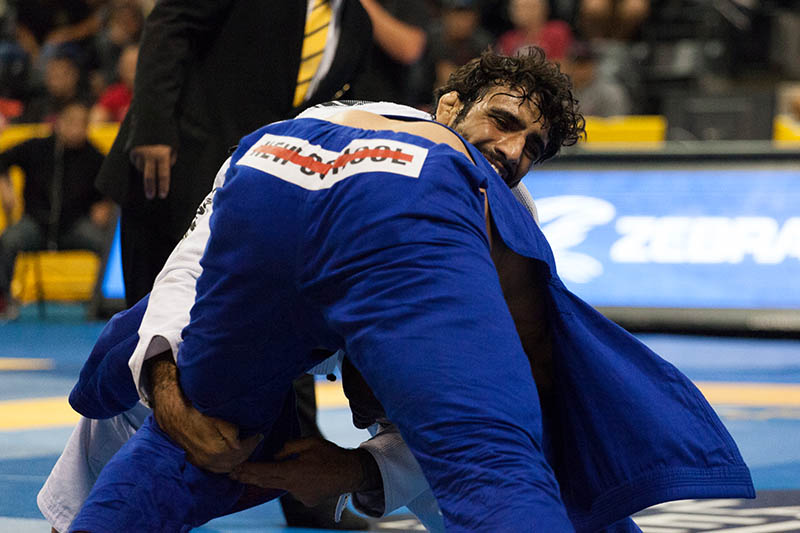
A couple of us train BJJ at work, including the business owner, who had the good sense to mat out one of the smaller upstairs rooms. Obviously we all leapt at it and set up a regular session to drill and roll. With the competition days away, we decided to get some rounds in — and we went hard. I mean really hard, like the ADCC finals hard. I'd been training six times a week, so I figured I could keep the pace up. After some back and forth, my partner locked a kimura grip on my right arm. I tried to roll out, he followed, I stiff-armed for a split second to escape, felt a pop, yelped like a dog whose tail had been stood on, and knew instantly something was wrong.
I put on a brave face and sat out the next round. When I could barely move the arm, I took myself to hospital — somewhere my records said I hadn't needed since the day I was born. The verdict: a hairline fracture in my right elbow. My first question was, naturally, "When can I get back to Jiu Jitsu?" The doctor's response was, "What is Jiu Jitsu?" I knew I was in trouble.
The One Day I Let Myself Mope
I headed home determined not to let it get me down, and messaged my coach to say I was out of the comp. He was disappointed, which only fed my own gloom. So I gave myself exactly one day to mope. I ate rubbish, I complained a lot, and my other half was thrilled, as you can imagine.
The next day I packed the moaning in. I refused to become one of those many training partners and acquaintances who used to train — the ones whose eyes go dull and lifeless when they bump into you in the street, because you still do the one thing that used to make them feel alive. That wasn't going to be me over a hairline fracture.
What BJJ Had Quietly Taught Me
For the first few days I was determined to keep my cardio, strength and flexibility. My legs still worked, so I did bodyweight squats like a maniac, stretched, and picked away at a bit of yoga and mobility so I felt like I was keeping up with my teammates grinding away in the gym. Predictably, that got boring fast. The diet slipped. I forgot the squats — because training to look good is nowhere near as motivating as training to choke someone unconscious. The road looked long, especially when I couldn't even lift my gear bag with the bad arm.
I've been doing Jiu Jitsu a couple of years now and it's become a huge part of my life, so the question crept in: what would I be without it? BJJ has brought out the best in me and taught me lessons like nothing else. At my worst I'm an erratic, absent-minded, irritable nightmare. At my best I can be patient, calm, collected and focused — and Jiu Jitsu is what makes that better version easier to reach. So I took the things the art had taught me mentally and pointed them straight at the injury: patience, focus, and an intelligent, honest approach to rest. Funnily enough, I got a lot calmer about the whole thing, started seeing real progress in the arm, and could suddenly picture a clear path back to the mats.
Coming Home to the Mats
Four weeks later, after some swimming and a fair bit of back-and-forth in my own head, I decided it was time for my grand return. I picked a gi session on purpose — all that fabric lets you defend and slow the attacks down more than nogi. I stepped on, put my gi on, and it felt like coming home. I pre-warned my very understanding training partners, drilled some cool techniques, and rolled defensively and carefully. I came out unscathed. I even picked up a stripe for my troubles.
The lesson? Patience. If you can be patient, you can do Jiu Jitsu forever — and forever is the goal, right? Injuries will happen to every one of us on this journey; the trick is to treat the time off as part of the training, not the end of it.
See you on the mats.
Originally published in Jiu Jitsu Style by Rick Baker, 27 September 2017. Refreshed for 2026.