Cobrinha's Crucifix Attacks: A BJJ Submission Breakdown
Back in July 2017 we ran a short clip of Rubens "Cobrinha" Charles walking through his crucifix attacks — a quick tease pointing at the full tutorial, more teaser than write-up. Even in that small…
Words: Jiu Jitsu Style
Back in July 2017 we ran a short clip of Rubens "Cobrinha" Charles walking through his crucifix attacks — a quick tease pointing at the full tutorial, more teaser than write-up. Even in that small dose, it was worth stopping for. Cobrinha was, and still is, one of the most inventive lightweights the sport of Jiu Jitsu has produced, a multiple-time black belt world champion whose guard game rewired how a whole generation thought about the X-guard and the back. The crucifix was never his flashiest weapon, but it was one of his smartest — and BJJ has only leaned harder into it since.
Watch it: Cobrinha teaches his crucifix attacks.
What the crucifix actually controls
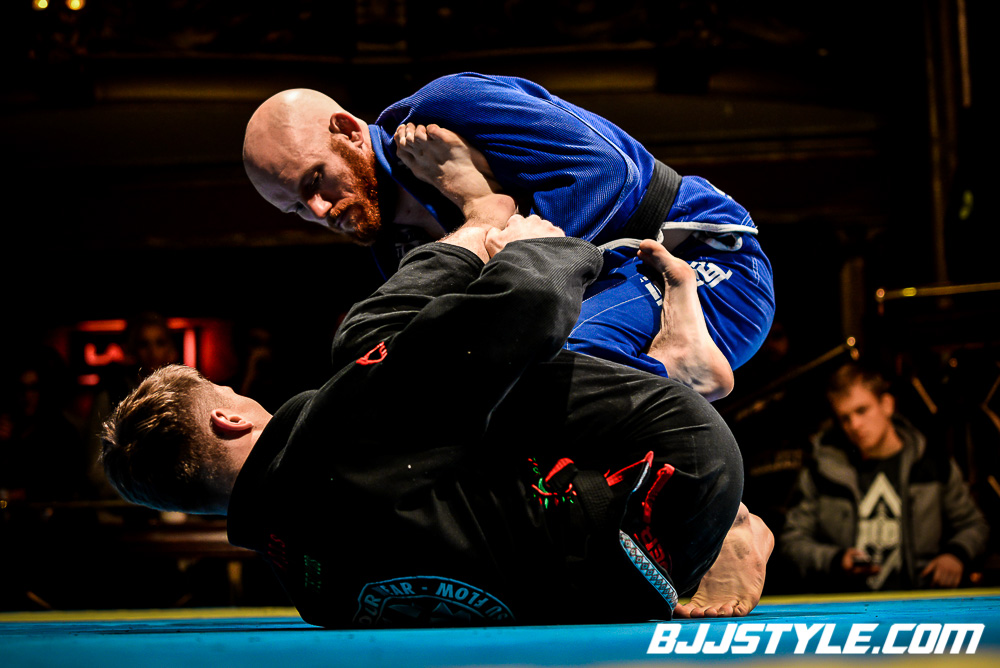
The crucifix isn't a submission on its own — it's a control position that sets several up. You trap one of your opponent's arms between your legs, pin the other with an overhook or a grip, and now they have nothing to defend with while you're free to attack the exposed side. From there Cobrinha's options were the same ones every good crucifix player still uses: a straight armlock on the free arm, a choke as the near-side collar or neck opens up, or a shift to a shoulder lock if the trapped arm gets isolated at the right angle. What made the position dangerous in his hands wasn't any single finish — it was that his opponent genuinely couldn't do anything about whichever one came next.
How Cobrinha got there
The entries are what separated the crucifix from a lucky scramble. Cobrinha rarely hunted it as a standalone attack — he found it on the way to somewhere else. A failed back take where one hook slipped but an arm got left behind. A turtle break where the far arm stayed trapped as the top player circled through. A guard pass that stalled out with an arm caught underneath. In every case the lesson was the same: stop fighting for the finish you originally planned and recognise the arm you're already holding is worth more than the position you were chasing.
Why the crucifix matters more in BJJ now than it did in 2017
The position has only grown up since that clip aired. The rise of the leg-lock game gave the crucifix a second life as a control point for attacking the legs safely — isolate an arm first, and the truck-style entries that Danaher-system competitors like Gordon Ryan and Craig Jones made famous become far harder to escape. Mikey Musumeci and the Ruotolo brothers both hunt arm control on the way into back attacks for exactly the reason Cobrinha did a decade earlier: a pinned arm turns a scramble into a formality. Submission-only formats have rewarded that patience even further, since there's no points clock pushing anyone to abandon a slow, secure crucifix for a faster, riskier option.
Strip away the era and the lesson from Cobrinha's clip hasn't moved. The crucifix rewards the BJJ player who notices an arm is already gone before their opponent does, and who's calm enough to finish from there instead of scrambling for something flashier. That's true whether you're drilling gi Jiu Jitsu at your local academy or hunting arm control in a no-gi submission-only bracket in 2026.
See you on the mats.
Originally published in Jiu Jitsu Style, 15 July 2017. Refreshed for 2026.