Claudio Calasans' Wrist Lock: A BJJ Masterclass
When this clip first ran on the magazine in January 2016, most of BJJ still treated the wrist lock as a novelty — the submission you laughed about, not the one you built a game on. Claudio…
Words: Jiu Jitsu Style
When this clip first ran on the magazine in January 2016, most of BJJ still treated the wrist lock as a novelty — the submission you laughed about, not the one you built a game on. Claudio Calasans was the walking rebuttal. By then the Atos standout had spent years quietly folding the hands of world-class black belts on the sport's biggest stages, and the mão de vaca — the "cow's hand," as Brazilians affectionately call it — had gone from his party trick to his calling card. Nobody who'd watched him at the Abu Dhabi World Pro was laughing anymore.
Watch it: Claudio Calasans' mão de vaca wrist lock.
The technique, step by step
Calasans catches this one from closed guard, legs locked around the opponent. Here is how he builds it.
He starts by trapping the hand on the same side with his own hand, gripping palm to palm. His grip sits deliberately between the wrist and the fingers — not on the forearm, not on the fingers, but right on the hand itself. In his words: "I hold his hand, I turn, and I make my grip between his wrist and his fingers."
Then he brings his other arm into play. He wraps it over and around the opponent's trapped arm and lays that hand on his own biceps — the same way you'd fold your arms across your chest, or set up a rear naked choke. From there he comes over the top and tucks the arm in tight against himself.
Now the finish. He crunches his whole upper body up, folding the opponent's arm so the hand travels toward their own shoulder — almost touching it. As he closes the shoulder down, the wrist has nowhere to go, and he bends the hand backward to get the tap. If the opponent has a very flexible wrist, he frees his other hand and uses it to add pressure and finish.
Two hands and a locked-up shoulder against one wrist is a leverage argument the wrist loses every time. The whole finishing motion is measured in degrees, not inches.
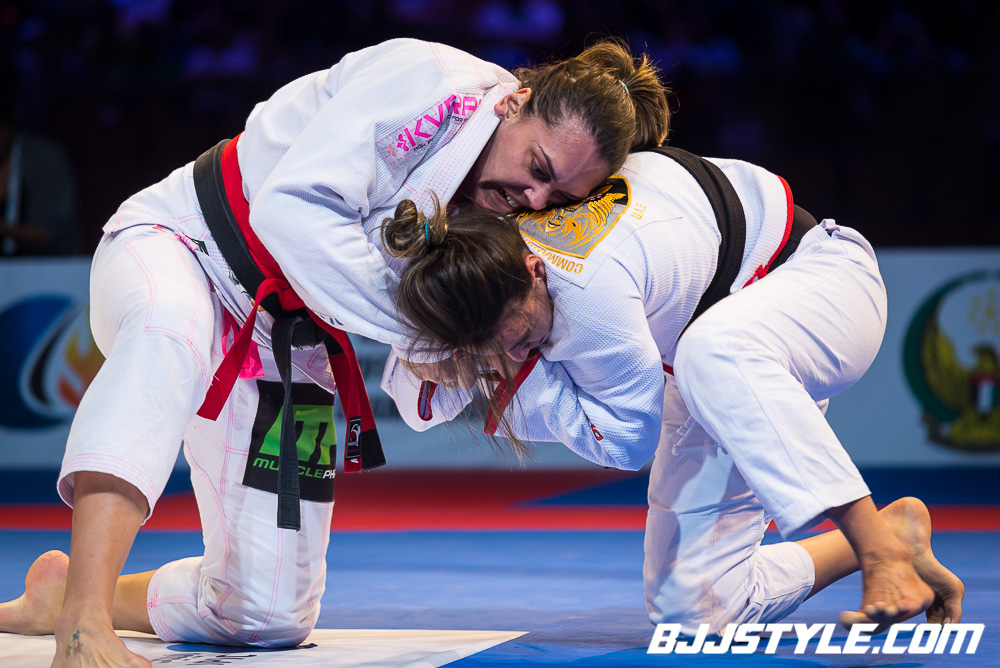
Judo hands in a Jiu Jitsu world
What made Calasans' wrist lock different from everyone else's was where it came from. He grew up in a judo family in São Paulo, coached by his father, and carried a judoka's obsession with grips into his Jiu Jitsu. Most people who dabble in wrist locks treat them as an opportunistic snatch — something you grab when an opponent gets sloppy. Calasans treated them as the natural tax on every grip exchange. When two players take hold of each other's sleeves and collars, somebody's wrist is always bent, loaded, or pinned. His judo-trained hands simply noticed it first.
That's the real lesson here, and it hasn't aged a day. The wrist lock isn't a separate technique you bolt onto your game; it's a reading skill layered over the grip fighting you're already doing.
Why the smallest submission needs the most respect
The mechanics are almost embarrassingly simple, which is exactly why they demand care. The wrist has almost no runway between "caught" and "hurt." Calasans, for all his ruthlessness in competition, was famously controlled with it — get the position, apply slowly, let the tap come early. Drill it that way or don't drill it at all.
Find a patient partner, work the entry slowly, and agree that taps come early and are honored instantly. The wrist lock rewards awareness and punishes ego, in roughly equal measure.
See you on the mats.
Originally published on Jiu Jitsu Style, 11 January 2016. Refreshed for 2026.