Andre Galvao's Drilling Concepts for BJJ
Back in July 2017 we posted a short clip of Andre Galvao breaking down his drilling concepts — one of the sharpest coaching minds in BJJ, distilled into a couple of lines. Nine years and a few…
Words: Jiu Jitsu Style
Back in July 2017 we posted a short clip of Andre Galvao breaking down his drilling concepts — one of the sharpest coaching minds in BJJ, distilled into a couple of lines. Nine years and a few thousand black belts out of Atos later, it's worth going back and actually unpacking what Galvao was teaching, because it's arguably the most useful thing anyone in Jiu Jitsu can learn: not a sweep, not a submission, but how to practice.
Watch it: Andre Galvao leading an Atos drilling session.
Why Andre Galvao built Atos on drilling
Galvao didn't become a multiple-time world champion and ADCC gold medallist by out-talenting everyone in the room. He built Atos into one of the most decorated competition teams on the planet on the back of a very unglamorous idea: reps done right beat reps done often. Watch any footage of an Atos class and the pattern is the same — pairs moving through a technique again and again, not for volume, but for precision. Galvao's whole philosophy treats drilling as the bridge between "I understand this move" and "I can produce this move under pressure," and he's always been blunt that most students skip straight from the first to expecting the second.
The concept behind the drilling
What made Galvao's approach stand out wasn't the techniques themselves — it was the structure underneath them. Three ideas run through everything he teaches:
- Isolate before you combine. Break a sequence down to the single movement that actually matters — the hip escape, the grip break, the frame — and drill that piece alone before stitching it back into the full technique.
- Add resistance in stages. Galvao's drilling rarely stays static for long. Cooperative reps build the shape; a partner offering 30, then 60, then 90 percent resistance is what turns a memorized motion into something that survives a live roll.
- Drill the position, not just the finish. A submission is the last three seconds of a much longer sequence. Galvao drills the entries and the recoveries just as hard as the tap, because that's where most matches are actually won or lost.
None of that is complicated. It's also exactly what separates a Jiu Jitsu student who can perform a move on command from one who's just seen it demonstrated a hundred times.
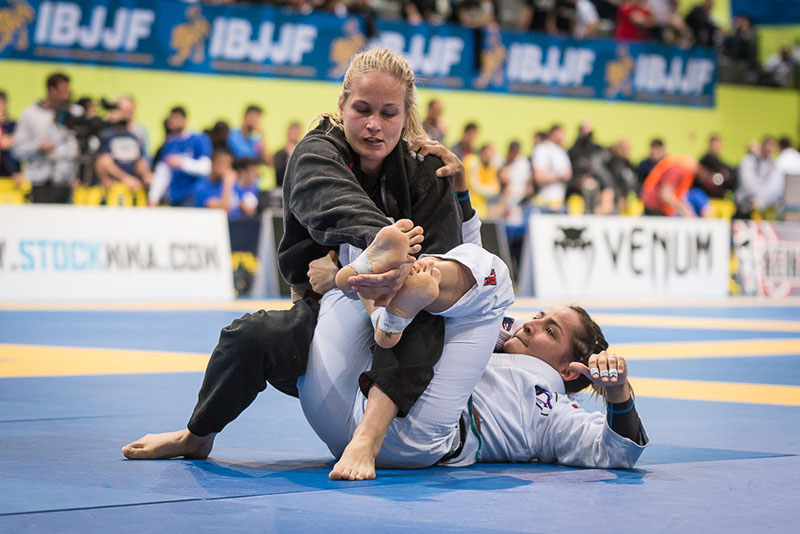
Drilling concepts in 2026's BJJ
The tools around drilling have changed more than the idea has. In 2017, "drilling" mostly meant what happened in the ten minutes before class rolling. Now every serious competitor treats it as a discipline of its own — Mikey Musumeci has built a reputation on obsessive, almost meditative drilling sessions he shares on his own channels, breaking a single leg-lock entry into pieces the way Galvao always taught. The Ruotolo brothers grew up inside exactly this kind of structured repetition. BJJ Fanatics and a dozen competing instructional apps now sell entire courses built around isolate-then-combine drilling progressions, and gyms that never used to program drilling time separately from live rolling now build it into every class.
The throughline is Galvao's original point: technique isn't something you learn once, it's something you rebuild under increasing pressure until it's yours. That's true whether you're a white belt drilling your first hip escape or a black belt refining a back-take before a major event.
Put it to work on the mats
Next time you're on the mats, don't just drill a technique — drill it the way Galvao teaches it. Break it into its smallest useful piece, run that piece until it's automatic, then ask a training partner to make it harder in stages. That's the whole secret, and it was hiding in a two-line post the whole time.
See you on the mats.
Originally published on Jiu Jitsu Style, 11 July 2017. Refreshed for 2026.