5 Tips to BJJ Black Belt
Brazilian Jiu Jitsu is hard — there's no point pretending otherwise. BJJ is hard for most people just to train regularly, and it's hard to develop your skills in a way that actually gets you promoted.
About the author: Sam Joseph is a second-degree black belt, head instructor and gym owner.
Brazilian Jiu Jitsu is hard — there's no point pretending otherwise. BJJ is hard for most people just to train regularly, and it's hard to develop your skills in a way that actually gets you promoted.
Unlike many traditional martial arts, BJJ promotions are still (in most cases) merit-based, and there are fewer belt ranks to chase. The only belts of merit are white, blue, purple, brown and black — black belt degrees and red belt promotions are time-based. That point is reinforced by the fact that world champions are crowned at every belt division, and it's still not uncommon to see blue belts mix it up in MMA against black belts in other martial arts.
The commonly quoted statistics are that only around 30% of people who try BJJ ever get their blue belt, and only about 3% ever make black belt. Now, it doesn't take long to realise that chasing belts is not, of course, what jiu jitsu is really about. That said, it's understandable why so many people start BJJ and wonder when — not if — they will hang up the gi and quit before reaching the rank of black belt.
As someone who once doubted whether I'd ever finish the journey to black belt myself, I'd like to offer a few tips I picked up along the way. Some of them are unorthodox, but they are all battle-tested — so take them in with an open mind.
Tip 1: Make a friend (or two)
Again, BJJ is hard. At first, the buzz of starting something new will get you to class even when you have "other options." But when that buzz starts to wear off, you will sometimes need other reasons to show up rather than go out to dinner, hit a concert or stay curled up on the couch scrolling through your phone. Making friends is great in general, but friends at the academy give you a level of accountability — your friends will be in class expecting you to be there with them. The more friends you make at the gym, the more effective they become at getting you in the door on days you might otherwise skip. The thing about skipped days is that they turn into skipped weeks, then skipped months, and sometimes years. Friends help you avoid the skipped days that can quietly bring your BJJ journey to an end.
Tip 2: Find BJJ role models
The idea of finding top-level BJJ athletes you can emulate is a healthy one. Sometimes it's an athlete's style that grabs you — maybe you love the pressure passing and crucifix-game of Tainan Dalpra, or the relentless creativity of Mikey Musumeci. Sometimes it's that their body type and physical attributes look a lot like yours. You may be tall and lanky and lean toward Gordon Ryan's back-attack system, or fast and twitchy and look to the Ruotolo brothers. You may be a smaller athlete and find inspiration in Ffion Davies's pressure and timing.
Regardless of why their game speaks to you, you can learn a lot from studying footage as you develop your own style. There's never been more of it — instructional apps, YouTube breakdowns, BJJ Fanatics, full-match libraries — so the access is no excuse. What I'd add to all that is the idea of finding a BJJ role model from a philosophical perspective too. Where do you stand on "sport BJJ" vs "BJJ for self-defence"? Pro-drilling like the ATOS team, or more anti-drilling in the Kit Dale mould? How do you feel about teammates competing against each other? I'm not saying to blindly adopt anyone else's philosophy — I'm saying you should let yourself be exposed to the topics and issues, then take the time to research and form your own opinions. Embrace the techniques AND the wider culture of BJJ. I really believe that investing in your role models — technical and philosophical — goes a long way to embedding BJJ in your life in a way that inspires longevity.
Tip 3: Go to at least two Jiu Jitsu tournaments a year
This is not necessarily a call to compete — though I firmly believe there are huge benefits in competing. I'm simply saying you should go to at least two tournaments a year as a competitor OR as a spectator. Let yourself soak in the atmosphere. Go to support a friend or teammate, or go to compete — either way, being at the tournament serves as a real-life reminder of the wider world you're a part of as a BJJ practitioner. I'm a big fan of attending an IBJJF Pan Ams, Europeans or Worlds at least once in your BJJ life. You can really immerse in the culture, and I have seen that excite practitioners in unique and special ways.
Tournaments expose you to things within BJJ that neither your home academy nor an algorithm-curated feed ever will. That exposure can spark a lifelong commitment to the mat and to the culture around it.
Tip 4: Try new techniques early and often
Don't get so wrapped up in the competition of the training room that your game stagnates. I'm all for "going hard" — but you have to balance that with the humility to try new things and open up your game. Over time it will make you better AND it will keep you from getting bored, which is the real danger.
One of the most incredible things about BJJ is how it keeps evolving. Go back and watch the Mundial footage from the early 2000s and compare it to the past couple of seasons — the open guard developments, the leg-lock systems, the back-take entries, the level of athlete on the mat. It's exciting. New positions and concepts are being introduced and refined constantly, and the access to them through instructional platforms and short-form video has never been higher.
As you train, you have to let yourself experiment. That's what keeps you mentally invested, and that stimulation is often the difference between getting bored and walking away versus staying the course to black belt. Give yourself the joy that comes from trying new things.
Tip 5: Find reasons to smile and laugh at the BJJ academy
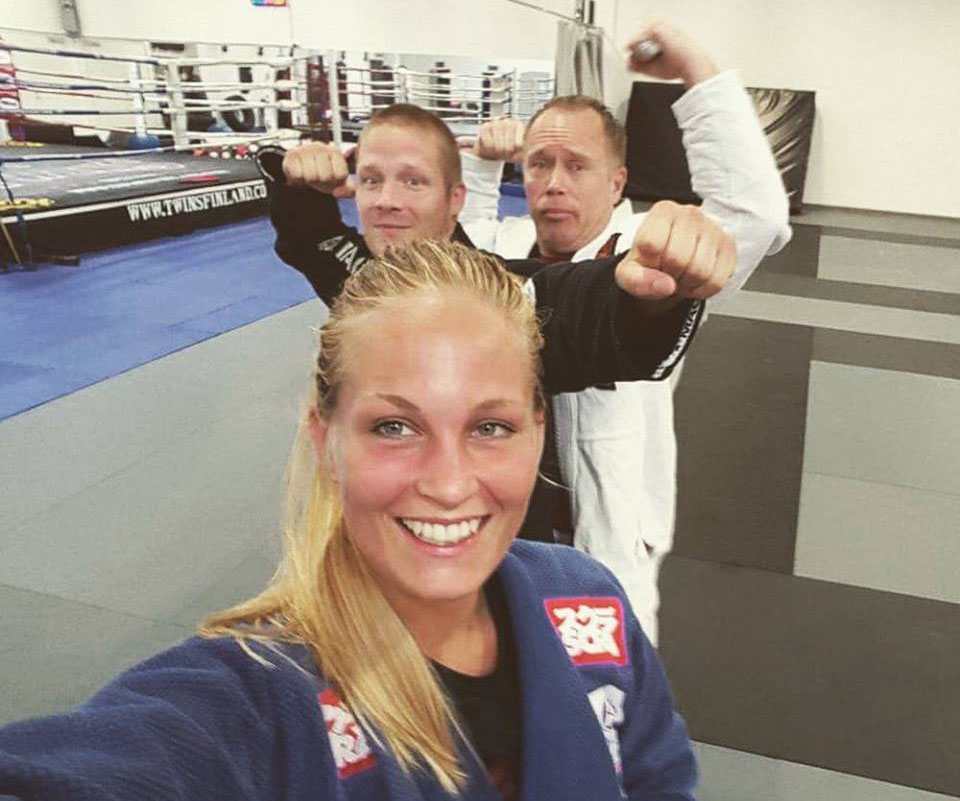
So, jiu-jitsu is hard — agreed? But just because something is hard does not mean it can't be fun. My last tip for BJJ longevity is to always remember you're having fun. Find ways and reasons to laugh and smile at your academy. Develop friendly rivalries, make a game out of submitting the partner who's notoriously tough to submit, laugh when someone catches you with a "lucky" move, and embrace appropriate humour EVEN when you're the butt of the joke. This tip, as much as any other, decides whether the academy becomes a safe and fun place for you.
Some of the most fun memories from my own 25-plus years on the mat are challenge matches with friends and teammates, and jokes that only those of us in the academy would get. If the gym is a place where you feel free to enjoy yourself, you will find reasons to train rather than reasons to dodge the "grind" that training can become.
Remember, you started BJJ because you saw value in it. Whether that value was self-defence, exercise, an athletic outlet or some other benefit, you found your way into a merit-based environment that can enrich your life physically, mentally and emotionally. The catch is that many people don't set themselves up properly to finish the journey we all start the first time we put on a gi. Like anything worthwhile, it takes commitment.
I hope these tips, which helped me at different points along the way, give you some tools to stay the course and earn a level of achievement that you'll treasure for the rest of your life. See you on the mat!
Originally published in Jiu Jitsu Style by Sam Joseph. Refreshed for 2026.